The most common shelf talker mistakes on a first order are choosing an attachment that does not fit the fixture, printing copy that expires too soon, picking the wrong material for the aisle and approving a design without checking it at real size. Custom Shelf Talkers catches many of these at the free mockup stage, but a few checks before you request a quote prevent nearly all of them.
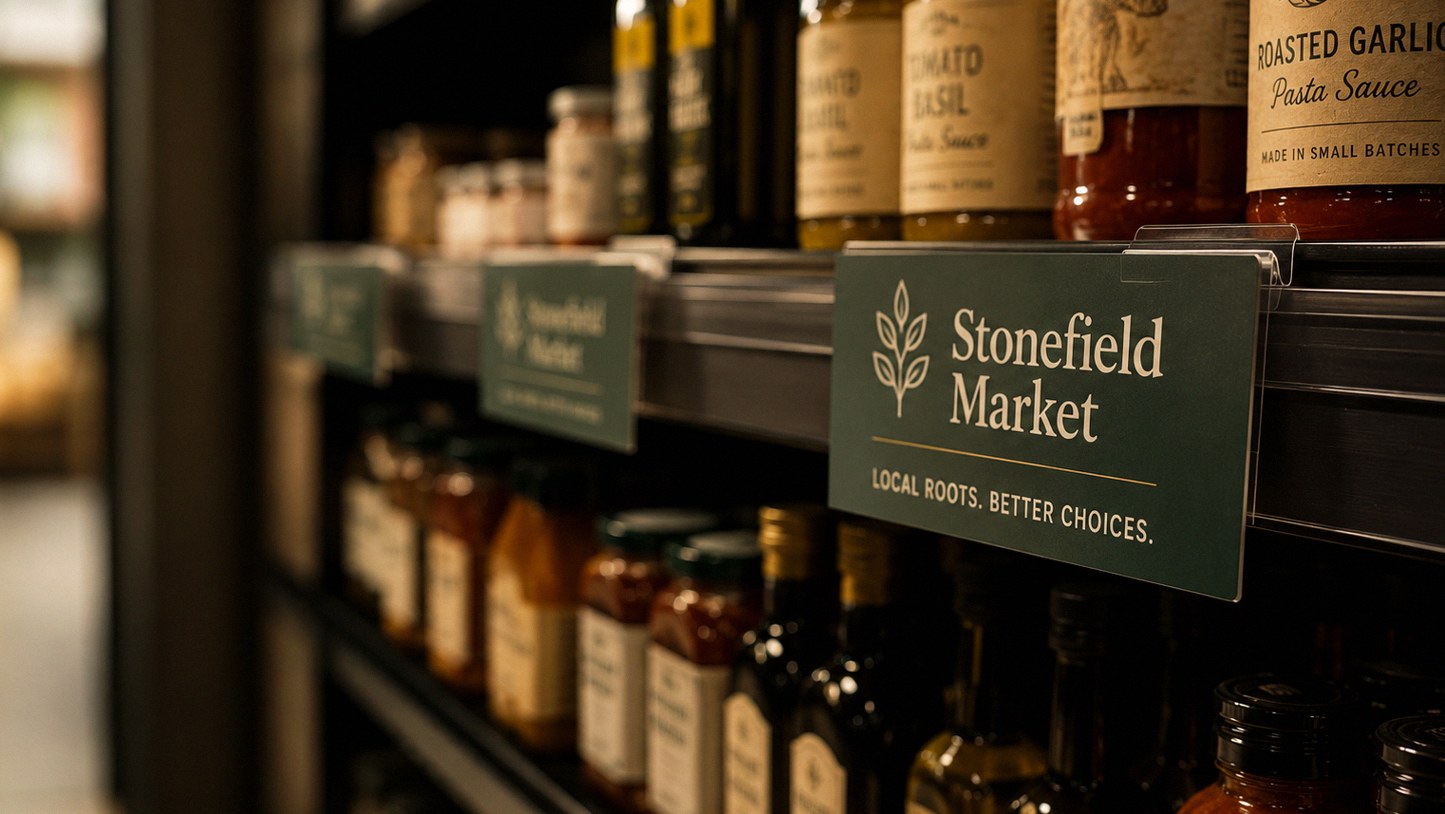
- Match the shelf talker attachment to the actual fixture before ordering
- Keep dates and short-term offers off evergreen shelf talkers
- Free mockup within 24 hours, with unlimited free revisions
- Minimum order of 12 shelf talkers, about 2 weeks standard turnaround
What are the most common mistakes on a first shelf talker order?
The most common mistakes on a first custom shelf talker order fall into five groups: the wrong attachment for the shelf, copy that goes out of date, a material that does not suit the aisle, a design that was only ever judged on a screen, and an order planned without the people who will install the signs. None of these are printing problems. They are planning problems, and each one is easy to fix before a quote request goes in.
First orders are where these mistakes cluster, because the buyer is usually ordering from a mental picture of the store rather than from the store itself. A marketing manager pictures a clean shelf edge. The actual shelf has wire baskets, a cooler door or a price channel already crowded with labels.
The good news is that Custom Shelf Talkers sends a free mockup within 24 hours and offers unlimited free revisions, and you pay nothing until you approve the design. That gives you room to correct course. The sections below walk through each mistake, why it happens and the quick check that prevents it.
Why does the wrong attachment style ruin so many shelf talker orders?
Shelf talkers fail most often because the attachment was chosen before anyone looked at the fixture. A clip-on shelf talker is built for a shelf edge or price channel. A case-stack header talker is built to sit on top of stacked product. A sign that is beautiful but cannot be mounted where the product actually sits ends up taped to the shelf or left in the back room.
The fix is to walk the aisle, or ask a store contact for photos, before you choose a style. Note what each location really has:
- Standard shelf edges with a price channel: a clip-on shelf talker or standard rectangle shelf talker usually fits.
- Floor stacks and end displays: a case-stack header talker reads from farther away.
- Wire shelving and cooler doors: confirm how the sign will attach before settling on a shape.
If your locations vary, say so in the quote request. Custom Shelf Talkers can split one order across more than one style, which is far cheaper in time than reprinting signs that do not hang.
Should shelf talkers include dates, prices or limited-time offers?
Shelf talkers meant to stay up for months should not carry dates, short-term offers or anything that will be wrong in a few weeks. Printing a promotion end date or a seasonal deal on an evergreen sign is one of the fastest ways to waste an order, because the whole run becomes unusable the day the offer ends.
Separate your messages into two groups before you design anything:
- Evergreen messages: staff pick, locally made, new to the store, best seller, pairs well with. These can stay on the shelf for a long time and are worth a sturdier material.
- Promotional messages: sale callouts, seasonal events and limited offers. These belong on a separate, shorter run, often a fluorescent sale shelf talker built to grab attention for a short window.
When a message changes often, consider a write-on panel instead of reprinting. Write-on custom shelf talkers keep your branding printed and leave space for staff to update the detail by hand, which keeps the printed part accurate for much longer.
How do you avoid choosing the wrong shelf talker material?
Choose the shelf talker material for the worst spot it will hang, not the nicest. A light card stock looks crisp on a dry shelf in a calm aisle, but the same sign can warp near a cooler, get bent by carts in a busy aisle or be handled constantly at checkout. Buyers who order one material for every location often find the signs in the toughest spots looking tired long before the rest.
Ask three questions about each location before you pick a material:
- Is the area cold, damp or near a door that opens often?
- Will shoppers, carts or restocking staff touch the sign regularly?
- How long does the message need to stay up?
If the answers differ by department, you do not need one compromise material for everything. Tell Custom Shelf Talkers where each group of signs will go, and the mockup and quote can reflect a sturdier option for the harsh locations and a lighter one where conditions are easy. That single note in your request prevents the most common durability complaint on a first order.
Why does a shelf talker that looks great on screen fail in the aisle?
A shelf talker design judged only on a monitor almost always looks bigger and clearer than it will on the shelf. On screen, the mockup fills the window, the small text is readable and the logo looks bold. In the aisle, the sign is a small card seen at an angle from a few steps away, surrounded by competing packaging.
Before approving a mockup, print it at actual size on plain paper, cut it out and hold it against the real shelf or a photo of it. Then check:
- Can you read the headline from a normal walking distance?
- Does the logo still register, or does it shrink to a smudge?
- Is there more text than a shopper will read in a passing glance?
- Does the sign cover the price label or barcode beneath it?
If anything fails, ask for a revision. Custom Shelf Talkers offers unlimited free revisions, so trimming copy or enlarging the headline costs you nothing but a short wait. The mistake is approving the first version because it looked fine at full screen.
What goes wrong when store staff are left out of a shelf talker order?
Shelf talker programs fail quietly when the people who install and maintain the signs never see the plan. Store teams know which shelves get reset often, where signs get knocked off, which fixtures cannot take a clip and which products already have retailer signage. Without that knowledge, a brand or head office orders signs that look right on paper and then sit in a box.
Bring at least one store contact in at two points. First, before the quote request, to confirm fixtures and locations. Second, at the mockup stage, to sanity-check size, placement and wording. That small step catches problems that nobody in an office would spot.
Also send installation guidance with the order. A short note that says which shelf talker goes on which product, and roughly where on the shelf, removes guesswork. Without it, staff may place signs on the wrong product or skip them entirely when the store is busy. Clear instructions are especially important when one order is shipped to several locations at once.
Is it a mistake to order a large shelf talker run before testing?
Ordering a large shelf talker run before seeing a single sign in a real store is a common and avoidable risk. When the message, style or placement is new to you, a small first run tells you far more than any mockup can. With a minimum order of 12 at Custom Shelf Talkers, a short test in one store or one department is realistic.
A practical approach looks like this:
- Order a small run of the new design for a handful of locations.
- Install the shelf talkers and watch how they hold up, how shoppers react and how staff handle them.
- Adjust the wording, size, attachment or material based on what you see.
- Place the larger order with confidence, using the approved artwork as the starting point.
Standard turnaround is about 2 weeks, with faster turnaround available through express shipping, so a test does not have to delay a rollout by much if you plan for it. The cost of a short test is small compared with reprinting an entire program because of a fixture or wording problem nobody saw coming.
How do these mistakes compare, and what prevents each one?
Most first-order shelf talker mistakes can be prevented with a single check that takes minutes. The table below summarizes each problem, what it looks like in the store and the check that stops it before you approve the mockup.
| Mistake | What it looks like in store | Check that prevents it |
|---|---|---|
| Wrong attachment | Signs taped on or left in the back room | Photograph each fixture before choosing a style |
| Dated copy | Expired offers still on the shelf, or the run thrown away | Split evergreen and promotional messages |
| Wrong material | Warped or bent signs in harsh spots | Choose material for the toughest location |
| Screen-only approval | Headline too small to read in passing | Print the mockup at actual size and hold it to the shelf |
| No staff input | Signs on the wrong product or never installed | Have a store contact review the mockup and send placement notes |
| No test run | A full program that needs reprinting | Start with a small run and adjust |
When you are ready, the how it works page explains each step, and the quote form is the place to list fixtures, locations and messages so the first mockup is close to right.
Frequently asked questions
Why do clip-on shelf talkers sometimes not fit the shelf they were ordered for?
Clip-on shelf talkers are designed for a shelf edge or price channel, so they struggle on wire shelving, glass doors or shelves with an unusual lip. The mismatch usually happens when the style is chosen from a catalog photo instead of the real fixture. Send photos of the shelves with your quote request and Custom Shelf Talkers can suggest an attachment that suits each location.
Should a first shelf talker order use the same message on every sign?
A first shelf talker order does not need one message for every sign, but keeping the number of messages small makes it easier to judge what works. Many buyers start with a single evergreen message plus one or two variations for different products. That keeps the order simple, keeps the design consistent and gives store staff fewer signs to match to the right shelves.
How can a buyer check shelf talker size before approving a mockup?
Shelf talker size is easiest to judge by printing the mockup at actual size on ordinary paper, cutting it out and holding it against the real shelf. Step back to normal walking distance and check whether the headline and logo still read clearly. If they do not, ask Custom Shelf Talkers for a revision, since revisions are free and unlimited before approval.
What shelf talker mistakes happen in refrigerated and frozen aisles?
Shelf talkers in refrigerated and frozen aisles often fail because they were printed on a material chosen for dry shelves. Cold, condensation and doors that open constantly can make a light sign warp or slip. The fix is to tell the printer which signs go near coolers so a sturdier material and a suitable attachment can be planned for those locations from the start.
Is it a mistake to use fluorescent shelf talkers across a whole store?
Fluorescent shelf talkers work because they stand out, so putting them on every shelf removes the very contrast that makes them effective. Shoppers quickly tune out a store where every sign shouts. Keep fluorescent colors for genuine sales and short promotions, and use full-color branded designs for evergreen messages like staff picks or local products so each type of sign keeps its job.
Why do some shelf talkers get thrown away soon after installation?
Shelf talkers get thrown away early when they carry a date, an offer or a product reference that stops being true. A promotion ends, a product is discontinued or a shelf reset moves items around, and the signs no longer match. Keeping time-sensitive wording off long-life designs, and using write-on panels for details that change, stretches the useful life of every sign.
Should shelf talkers ever mention a specific end date for an offer?
Shelf talkers should only show a specific end date when the run is meant for that single promotion and will be removed when it ends. For anything intended to stay up longer, leave the date off and let a write-on panel or separate short run carry it. Custom Shelf Talkers can lay out both versions so the evergreen design stays accurate.
How do store employees affect whether a shelf talker order succeeds?
Store employees decide whether shelf talkers actually reach the shelf and stay there. They know which fixtures take clips, which shelves get reset often and where signs get knocked off. Asking a store contact to review the mockup and sending clear placement notes with the order are two of the simplest ways to make sure every sign is installed on the right product.
How do brands avoid shelf talkers that conflict with a retailer's own signage rules?
Shelf talkers supplied by a brand should be checked against the retailer's signage guidelines before artwork is approved. Some stores limit sign size, placement or color near their own price labels. Ask your retail contact for any rules early, share them in the quote request, and Custom Shelf Talkers can design the mockup to fit those limits instead of reworking it later.
Why do shelf talkers with long legal or disclaimer text underperform?
Shelf talkers with long legal or disclaimer text underperform because shoppers read them in a passing glance, and dense fine print crowds out the headline. When small text is truly required, keep it short, place it at the bottom and make the main message large. If the disclaimer is lengthy, a QR code or a nearby larger sign is usually a better home for it.
What should happen to old shelf talkers when new ones go up?
Old shelf talkers should come down at the same time the new ones go up, so shoppers never see two conflicting messages on one shelf. Include a removal note in your installation instructions and name which signs are being replaced. Evergreen shelf talkers in good condition can be stored flat for reuse, while dated promotional signs can simply be recycled.
Get a free mockup for your shelf talkers
Send your logo or idea and the quantity you have in mind. Custom Shelf Talkers returns a free mockup within 24 hours, you approve the design before anything is produced, and standard turnaround is about two weeks with faster options available. Get a custom quote.