Author: George

  • Questions to Ask a Shelf Talker Supplier Before You Order

    Questions to Ask a Shelf Talker Supplier Before You Order

    Published November 16, 2026. Last updated November 16, 2026.

    Before you order shelf talkers, ask any supplier about shelf fit, attachment, material, artwork approval, versions, turnaround and packing. Custom Shelf Talkers answers that checklist up front with a free mockup within 24 hours, unlimited free revisions and about 2 weeks turnaround after approval, so you know exactly what you are buying before you pay.
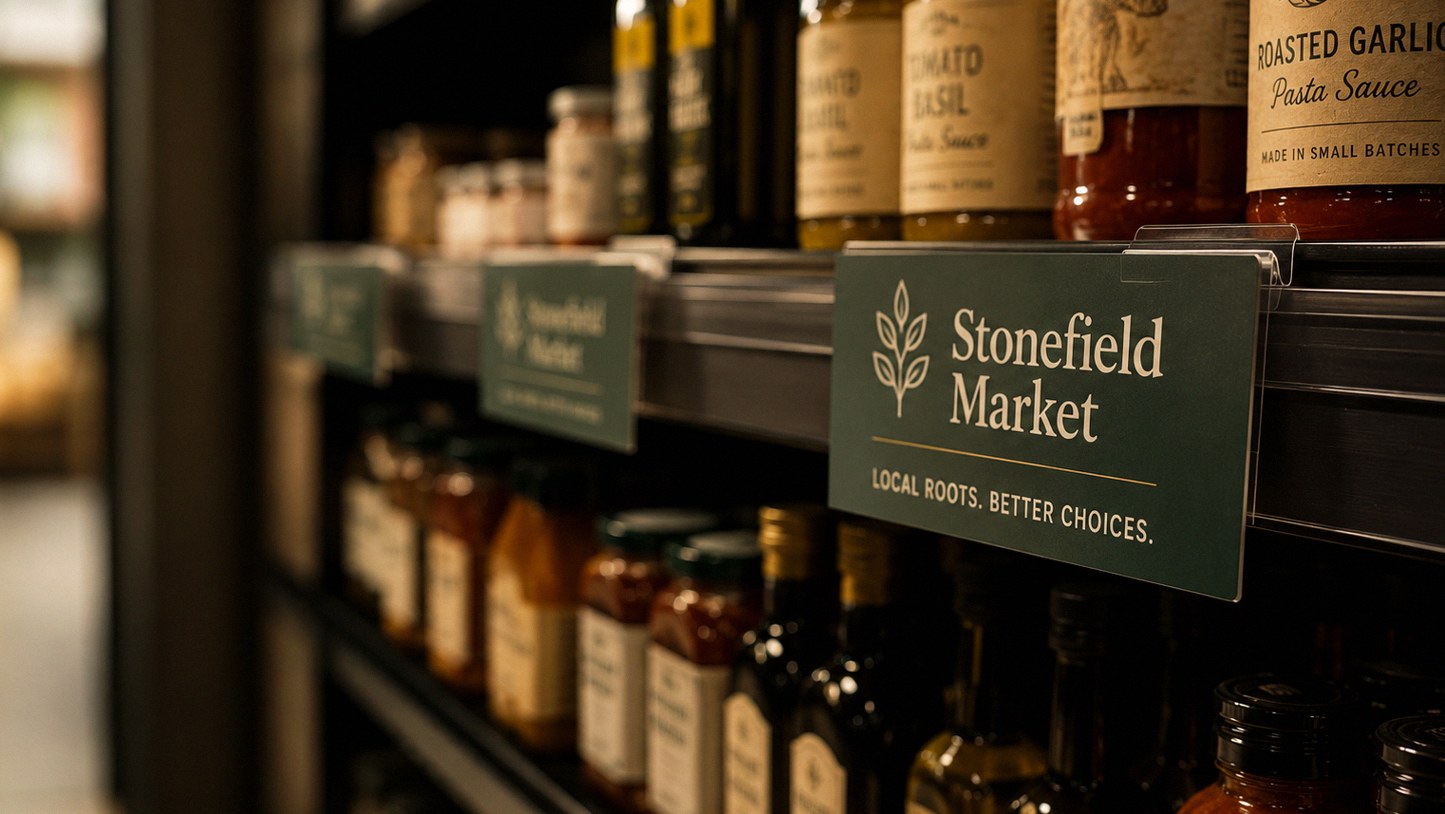
    Questions to Ask a Shelf Talker Supplier Before You Order - custom printed shelf talkers from Custom Shelf Talkers
    Custom shelf talkers with a logo, produced by Custom Shelf Talkers.
    Key facts
    • Ask which shelf talker style fits your actual fixture, with a shelf photo
    • Free mockup within 24 hours and unlimited free revisions
    • Pay nothing until you approve the design
    • Standard turnaround about 2 weeks after approval, faster with express shipping
    • Minimum for your chosen style confirmed on the quote

    Why should you ask a shelf talker supplier questions before you order?

    Asking a shelf talker supplier a short list of questions before you order is the fastest way to avoid signs that do not fit, fade early or arrive after the in-store date. Shelf talkers look simple, but each one has to match a specific shelf edge, survive a specific aisle and carry a message that store staff can install without guessing. The answers a supplier gives tell you whether those details have been thought through.

    A good shelf talker supplier asks you questions too. If a quote comes back without anyone asking about your shelving, your install date or how many versions you need, the supplier is printing a file, not solving a merchandising problem. That gap usually shows up later as a reprint.

    The checklist below is organized the way a buyer actually works through an order: fit and attachment first, then material, artwork, quantity, timing and finally comparing quotes. Use it with any supplier, including Custom Shelf Talkers, and keep the written answers with your order so the next person who reorders knows what was agreed.

    What should you ask about shelf fit and attachment?

    Start with fit, because a shelf talker that will not attach is worthless no matter how good the artwork is. Ask the supplier which shelf talker style suits your fixtures: a clip-on shelf talker for shelf edges with a price channel, a standard rectangle for flat placement, a case-stack header talker for floor stacks, or a die-cut shape where a silhouette matters more than copy space.

    Then ask how the shelf talker attaches and whether the supplier has seen your fixture type before. Wire shelving, cooler doors, wood shelves and gondola price channels each behave differently. Bring a photo of the actual shelf to the conversation; it answers more questions than any spec sheet.

    Question to askWhy it mattersA strong answer sounds like
    Which style fits my shelf edge?Wrong style means signs that fall off or block labelsA specific style recommendation based on your photo
    How does it attach?Staff need to install it in secondsClip, channel or flat placement, explained plainly
    Will it cover the price label or barcode?Retailers remove signs that hide pricingThe mockup shows placement relative to the label
    Does it work in cold cases?Condensation and cold change how signs hold upA material suggestion for refrigerated spots
     - one of the custom shelf talkers styles from Custom Shelf Talkers
    Custom shelf talkers from Custom Shelf Talkers.

    Which material questions matter for where shelf talkers will hang?

    Ask where the shelf talkers will live and how long they need to last, then ask which material the supplier recommends for that answer. A promotional shelf talker that comes down after a short campaign can be lighter card stock, while an evergreen sign in a busy aisle or a cooler benefits from a sturdier, moisture-tolerant material such as coroplast.

    Good follow-up questions cover finish and readability. Glossy finishes can catch glare under bright store lighting, while matte finishes read more evenly from an angle. If staff will write prices or notes on the sign, ask whether the write-on area accepts marker cleanly. If the sign is meant to shout a sale, ask how a fluorescent sale shelf talker compares with full-color printing for standout.

    • How long will the shelf talker stay up: one promotion or a full season?
    • Will it face moisture, cold, sunlight or frequent handling?
    • Do staff need to write on it?
    • Should it stand out loudly or match a calm brand look?

    A supplier who answers these with a reason, not just a material name, is matching the shelf talker to the job rather than defaulting to whatever is easiest to print.

    What should you ask about artwork, mockups and approval?

    Ask to see a mockup before you pay, and ask how long it takes to get one. Custom Shelf Talkers returns a free mockup within 24 hours, offers unlimited free revisions, and you pay nothing until you approve the design. Those three answers set a useful benchmark when you speak with any supplier.

    Beyond the mockup itself, ask whether the supplier will lay out the shelf talker from your logo and copy or expects finished artwork. Many retail teams have a logo and a message but no designer on hand, so a supplier who builds the layout saves real time. Ask how the mockup shows true placement: a flat file is useful, but a shelf talker shown at scale next to a product or price channel reveals crowding problems early.

    Finally, ask who on your side needs to approve the shelf talker and what happens if wording changes after approval. A clear answer keeps marketing, store operations and any brand partners aligned, and it prevents the common situation where a late edit pushes the whole order past the install date.

    How many versions and how many shelf talkers should you ask about?

    Ask whether one order can include several shelf talker designs, and ask the minimum for the specific style you want rather than assuming a single number applies to every product. Minimums can differ by style and material, so Custom Shelf Talkers confirms the minimum for your chosen shelf talker on the quote instead of quoting a blanket figure.

    Version count matters as much as total quantity. A store that wants one message per department, one per brand or one per language is ordering several designs, not one. Tell the supplier how the versions split so the quote and the mockups match the real program.

    Also ask how spares are handled. Shelf talkers get bent, removed by shoppers or tossed during resets, so a small allowance of extras keeps shelves covered between orders. For multi-store programs, ask how the order will be packed and labeled so each location or department receives the right set without sorting through boxes. The bulk custom shelf talkers page walks through that kind of rollout in more detail.

    What should you ask about turnaround and delivery dates?

    Ask for the turnaround in writing and ask when the clock starts. At Custom Shelf Talkers, standard turnaround is about 2 weeks after design approval, with faster turnaround available through express shipping. Knowing that the clock starts at approval, not at the first email, is the single most useful timing fact in any shelf talker order.

    Give the supplier your in-store date, not just a ship date. A supplier who knows when signs need to be on the shelf can tell you whether approval needs to happen this week or whether there is slack. Then ask what could delay the order: late artwork, wording changes after approval and unconfirmed store counts are the usual culprits.

    1. Share the in-store date and the delivery address list up front.
    2. Ask the supplier to confirm the approval deadline that protects that date.
    3. Approve the mockup promptly and avoid late wording changes.
    4. Ask about express shipping only if the standard schedule cannot meet the date.

    Building the schedule backward from the shelf keeps the shelf talkers from arriving after the promotion has already started.

    How do you compare two shelf talker quotes side by side?

    Compare shelf talker quotes on what is actually included, not on the headline figure. Two quotes for the same quantity can describe different materials, different numbers of designs, different attachment methods and different delivery assumptions. Line them up against the same checklist before deciding.

    CompareWhat to check on each quote
    Style and attachmentThe same shelf talker style and fit for your fixtures
    Material and finishCard stock or sturdier material, matte or gloss
    Design versionsHow many distinct designs the quote covers
    Mockup and revisionsWhether a free mockup and revisions are included before payment
    TimingTurnaround from approval and the delivery method
    PackingWhether sets are separated by store or department

    Price drivers for shelf talkers are mostly predictable: style, size, material, number of versions, quantity and how fast the order must arrive. If one quote is far apart from another, one of those inputs is usually different. Ask each supplier to restate the inputs, and the comparison becomes fair.

    How does Custom Shelf Talkers answer this checklist?

    Custom Shelf Talkers is set up so the answers to this checklist arrive with the quote rather than after the order. You send your logo, your message, a photo of the shelf and your in-store date through the quote form, and the team recommends a shelf talker style, a material and a layout for that fixture.

    • A free mockup within 24 hours, with unlimited free revisions.
    • Nothing to pay until you approve the design.
    • Standard turnaround of about 2 weeks after approval, with faster turnaround through express shipping.
    • Styles that include clip-on, standard rectangle, case-stack header, fluorescent sale and die-cut shape shelf talkers.
    • The minimum for your chosen style confirmed on the quote.

    If you are still choosing between shapes, the comparison of rectangle and die-cut shelf talkers is a good next read. If you already know what you need, the quote form is the quickest way to put this checklist to work.

    Frequently asked questions

    What should a shelf talker supplier ask you before sending a quote?

    A shelf talker supplier should ask about your shelving or fixture type, the message, how many designs you need, where the signs will hang and the date they must be in store. Custom Shelf Talkers asks for a shelf photo and the in-store date so the recommended style and material match the real fixture. A quote that skips these questions often leads to signs that need reprinting.

    Should a shelf talker supplier recommend a style or just print what you request?

    A shelf talker supplier should do both: print what you ask for, but tell you when another style fits your fixture better. A clip-on suits shelf edges with a price channel, a case-stack header suits floor stacks and a die-cut shape suits a strong visual identity. A recommendation backed by a reason shows the supplier has looked at your shelf, not just your file.

    How can a buyer tell if a shelf talker supplier understands store shelving?

    Shelf talker suppliers who understand store shelving ask about price channels, wire racks, cooler doors and where the price label sits before suggesting a design. They show the mockup at scale beside the shelf edge or product. If a supplier never mentions placement or label coverage, expect to discover fit problems during installation instead of during the proof stage.

    Why ask how a shelf talker order will be packed and labeled?

    Shelf talker orders with several designs or several locations are much easier to install when each set arrives separated and labeled by store, department or message. Without that, staff sort loose signs by hand and the wrong talker ends up on the wrong shelf. Ask the supplier how sets will be grouped before approval so packing matches your rollout plan.

    How should you share your in-store date with a shelf talker supplier?

    Shelf talker suppliers plan best when you give them the date signs must be on the shelf, not only a ship date. Put the in-store date in the first message or quote form, along with delivery addresses. Custom Shelf Talkers then works backward from about 2 weeks of turnaround after approval and tells you when the mockup must be approved to stay on schedule.

    Which shelf talker questions matter most for refrigerated and frozen sections?

    Shelf talkers for refrigerated and frozen sections need questions about condensation, cold and how the sign attaches to a cooler door or wire shelf. Ask which material holds its shape when damp and whether clips grip cold surfaces reliably. A supplier should suggest a sturdier, moisture-tolerant option for these spots rather than the same light stock used in dry aisles.

    Should you ask a shelf talker supplier about finish and glare?

    Shelf talker finish affects how easily shoppers can read a sign under bright store lighting. Glossy finishes can reflect glare when viewed from an angle, while matte finishes tend to read more evenly down an aisle. Ask the supplier which finish suits your lighting and whether staff will write on the surface, since a write-on area needs a finish that accepts marker cleanly.

    How do you check whether two shelf talker quotes describe the same order?

    Shelf talker quotes describe the same order only when style, material, finish, design count, attachment, timing and packing all match. List those inputs for each quote side by side and ask each supplier to confirm any line that is unclear. Differences between quotes usually trace back to one of these inputs, so aligning them makes the comparison fair.

    How many shelf talker suppliers should you contact before choosing one?

    Shelf talker buyers usually learn enough by putting the same checklist to two or three suppliers. Fewer gives you nothing to compare, and many more turns the decision into paperwork. Send each supplier identical details: fixture photo, message, number of designs, material preference and in-store date. Custom Shelf Talkers replies with a style recommendation and a free mockup within 24 hours, which makes side-by-side review simple.

    Who should hold the answers from a shelf talker supplier inside your team?

    Shelf talker supplier answers belong with the person who owns the program, usually a marketing, merchandising or store operations lead. Keep the written answers on style, material, turnaround and packing alongside the approved mockup. When the next order comes up, whoever places it at Custom Shelf Talkers can start from those notes instead of repeating the whole checklist.

    Get a free mockup for your shelf talkers

    Send your logo or idea and the quantity you have in mind. Custom Shelf Talkers returns a free mockup within 24 hours, you approve the design before anything is produced, and standard turnaround is about two weeks with faster options available. Get a custom quote.
  • Holiday Shelf Talkers: A Seasonal Plan From Thanksgiving to Valentine’s Day

    Holiday Shelf Talkers: A Seasonal Plan From Thanksgiving to Valentine’s Day

    Published November 9, 2026. Last updated November 9, 2026.

    Holiday shelf talkers ordered in November can still be on the shelf before the busiest December weeks, and the same order can cover the January reset and Valentine's Day. Custom Shelf Talkers returns a free mockup within 24 hours with about 2 weeks turnaround, so one seasonal plan with clear install dates keeps every wave on time.

    Holiday Shelf Talkers: A Seasonal Plan From Thanksgiving to Valentine's Day - custom printed shelf talkers from Custom Shelf Talkers
    Custom shelf talkers with a logo, produced by Custom Shelf Talkers.
    Key facts
    • Free mockup within 24 hours, unlimited free revisions
    • Standard turnaround about 2 weeks after approval, faster with express shipping
    • Plan holiday, January and Valentine's shelf talkers as one quote with separate install dates
    • Keep dates and prices off shelf talkers you want to reuse
    • Pay nothing until you approve the design

    Which seasonal moments should shelf talkers cover between now and February?

    Shelf talkers for the next 90 days should cover three retail moments: the holiday gifting and entertaining run through late December, the January reset when stores clear seasonal stock and push New Year goals, and the lead-up to Valentine’s Day in early February. Each moment asks a different job of a shelf talker, so planning them as one program rather than three rush orders saves time and keeps the look consistent.

    The holiday window is about gifting, hosting and stocking up. Shoppers browse longer, compare more and respond to signs that help them decide, such as gift ideas, pairing suggestions or staff favorites. January flips the mood toward fresh starts, smaller baskets and clearance. Valentine’s Day is short and focused on a few categories, such as chocolate, flowers, wine, cards and beauty.

    Because Custom Shelf Talkers quotes, mocks up and prints each design to order, you can request all three message sets at once and approve them on your own schedule. The sections below cover timing, styles, copy and how to stage the order.

    How late can you order holiday shelf talkers and still get them in the store?

    Holiday shelf talkers ordered in early to mid November can still reach the shelf well before the busiest December weeks, because Custom Shelf Talkers returns a free mockup within 24 hours and standard turnaround is about 2 weeks after design approval. Faster turnaround is available with express shipping. The real constraint is usually internal approval, not printing.

    Work backward from the date the signs need to be installed, not the date of the holiday itself. Store teams need a few days to place shelf talkers, and most retailers want holiday signage up before the first big shopping weekend. If your wording still needs sign-off from a buyer, a brand manager or a franchise owner, build that time in first.

    1. Pick the install date for each store or department.
    2. Request a quote with sizes, styles, messages and quantities.
    3. Review the free mockup, which arrives within 24 hours.
    4. Use unlimited free revisions to settle wording, then approve.
    5. Allow about 2 weeks for production and shipping, or ask about express shipping.

    You pay nothing until you approve the design, so starting the mockup early carries little risk even if your final quantities are still moving.

    Custom shelf talkers with a logo from Custom Shelf Talkers
    Custom shelf talkers from Custom Shelf Talkers.

    Which shelf talker styles work best for the holiday season?

    The best shelf talker style for the holidays depends on where the sign hangs and how long it needs to last. Clip-on shelf talkers suit everyday gondola shelving, die-cut shapes earn attention on gift and feature sets, case-stack header talkers crown holiday pallet displays, and fluorescent sale shelf talkers flag markdowns without a full redesign.

    StyleBest holiday useWhy it fits
    Clip-on shelf talkerGift ideas on standard shelvesQuick to install and move as sets change
    Die-cut shape shelf talkerFeature bays and gift endcapsA seasonal outline stands out from everyday signage
    Case-stack header talkerStacked holiday stock and entertaining itemsReads from the aisle above a tall display
    Fluorescent sale shelf talkerLate-December and January markdownsBright stock signals a deal at a glance
    Standard rectangle shelf talkerStaff picks and evergreen winter messagesRoom for a headline and a short note

    Many stores mix two or three of these in one order. A grocery store might pair clip-on gift ideas in the baking aisle with a case-stack header talker on a holiday beverage display. The rectangle vs die-cut comparison walks through the shape decision in more detail.

    What should holiday shelf talker copy say?

    Holiday shelf talker copy should help a shopper make a decision in a few seconds: who the product is for, why it makes a good gift or fits a holiday meal, and what makes it different from the item beside it. Short headlines such as gift ideas, host favorites or staff pick for the season outperform long product stories on a crowded shelf.

    Keep dates off shelf talkers you want to reuse. A sign that names a specific holiday weekend expires the moment that weekend passes, while a sign that says winter favorite or great for gifting can stay up from Thanksgiving into January. Save the dated or offer-specific wording for a smaller run, or use write-on shelf talkers so staff can add the detail by hand.

    • Gift guidance: who the product suits, such as a host, a coworker or a teacher.
    • Occasion pairing: what the item goes with at a holiday meal or party.
    • Social proof from staff: a named staff favorite builds trust without inventing reviews.
    • Local angle: made nearby or from a regional maker, where that is true.

    Avoid printing prices on seasonal shelf talkers. Prices change through December markdowns, and a sign with an outdated price causes problems at the register.

    How should shelf talkers change for the January reset?

    Shelf talkers for the January reset should replace gift and hosting language with fresh-start messages: new arrivals, healthier choices, organizing and budget-friendly picks, plus clear markdown signage for leftover seasonal stock. Ordering January shelf talkers in the same quote as your holiday set means the artwork is approved before staff are stretched thin in late December.

    January is also when many stores reset planograms, so check whether shelf positions are changing before you finalize sizes and attachments. A clip-on shelf talker that fit a December gift set may not suit the shelf it moves to. The fluorescent sale shelf talker is a practical choice for clearance because the bright stock does the work and the wording can stay general.

    If you supply many stores, treat January as a second delivery wave. Approve both designs at once, then ask Custom Shelf Talkers to schedule the January shelf talkers to arrive after the holiday rush, so the boxes do not get lost in a crowded stockroom.

    Are Valentine's Day shelf talkers worth ordering separately?

    Valentine’s Day shelf talkers are worth ordering separately when the store has a dedicated set for chocolate, flowers, wine, cards or beauty, because the window is short and the message is narrow. For stores without a feature set, a few die-cut or write-on shelf talkers on the relevant shelves usually do the job without a large run.

    The best Valentine’s shelf talkers focus on quick gifting decisions: for a partner, for a friend, for a last-minute shopper. A heart-shaped die-cut shelf talker signals the occasion without needing many words, and a short headline reads well even from the end of the aisle.

    Request the Valentine’s design with your January order if you can. The free mockup arrives within 24 hours, so a combined quote costs you little extra time, and the signs can ship on their own schedule closer to the install date.

    How do you plan a seasonal shelf talker program as one order?

    A seasonal shelf talker program works best as one quote with separate message sets, separate quantities and separate install dates. Custom Shelf Talkers can mock up every design together, which keeps fonts, colors and logo placement consistent from the holidays through Valentine’s Day while letting each set ship when it is needed.

    Start with a simple planning sheet before you request the quote. List each store or department, the seasonal moment, the style, the message and how many signs each location needs. Add a few spares for damaged or misplaced signs. The bulk custom shelf talkers guide covers how multi-store teams split quantities between large and small locations.

    • Holiday set: gift and hosting messages, installed before the first big weekend.
    • January set: fresh-start and clearance messages, delivered after the holidays.
    • Valentine’s set: a smaller run for feature shelves and gift sets.

    Include the install date for each set in your quote request. That single detail helps the production schedule more than anything else, and it lets the team flag early if express shipping makes sense for any wave.

    What should you send with a seasonal shelf talker quote request?

    A seasonal shelf talker quote request should include your logo files, the wording for each message, the styles you want, rough quantities per set, photos of the shelves or fixtures and the install date for each wave. With those details, Custom Shelf Talkers can return an accurate quote and a free mockup within 24 hours.

    Price depends on the style, material, size, number of designs and quantity, so the clearer the request, the more useful the quote. Unsure about a detail? Say so. Unlimited free revisions mean the wording and layout can change after the first mockup, and you pay nothing until you approve the design.

    When you are ready, use the custom quote form and see how it works for the full approval process.

    Frequently asked questions

    Can one shelf talker design last from Thanksgiving through New Year?

    A shelf talker design can last from Thanksgiving through New Year if the copy avoids specific dates and offers. Wording such as winter favorite, great for gifting or staff pick for the season stays accurate for the whole period. Custom Shelf Talkers can mock up a seasonal design within 24 hours so you can test whether the wording holds up across both holidays.

    Should holiday shelf talkers use red and green or stick to brand colors?

    Holiday shelf talkers work best when they keep your brand colors as the base and add a seasonal accent, such as a festive border, a small icon or a die-cut outline. A full red and green redesign can make your products harder to recognize. The free mockup from Custom Shelf Talkers lets you compare a brand-led version with a more seasonal one before ordering.

    Can holiday shelf talkers mention gift ideas for specific people?

    Holiday shelf talkers can mention gift ideas for specific people, and that is one of the most useful messages for the season. Short lines such as for the host, for a coworker or for the coffee lover help shoppers who arrive without a plan. Keep each shelf talker to one idea so the message reads quickly from the aisle and fits the product beside it.

    Which stores benefit most from seasonal shelf talkers in December?

    Seasonal shelf talkers help most in stores where shoppers are choosing gifts or holiday food and drink: grocery stores, specialty food shops, wine and liquor stores, gift shops, bookstores, beauty retailers and hardware stores with gift sets. Any store with a holiday feature bay or endcap can use them. Custom Shelf Talkers prints shelf talkers to order, so each store can choose styles that suit its fixtures.

    Do die-cut holiday shelf talkers take extra planning?

    Die-cut holiday shelf talkers take a little extra planning because the shape needs to be confirmed in the mockup before production. Choosing a simple outline, such as a star, ornament or gift tag, keeps the design clear and easy to install. Custom Shelf Talkers returns a free mockup within 24 hours, so you can check how the die-cut shape looks before you approve the order.

    How can store staff swap holiday shelf talkers for January signs quickly?

    Store staff can swap holiday shelf talkers for January signs quickly when both sets use the same attachment and size, so the new sign goes straight into the old position. Labeling each box by department or aisle also speeds up the changeover. Custom Shelf Talkers can produce the holiday and January sets from one approved layout, which keeps the swap simple for busy teams.

    Should January clearance shelf talkers be fluorescent?

    January clearance shelf talkers often work well in fluorescent stock because the bright color signals a markdown before the shopper reads a word. Fluorescent signs are best kept to clearance areas so they do not compete with regular signage across the whole store. Custom Shelf Talkers offers a fluorescent sale shelf talker that can carry your logo with general clearance wording and no printed prices.

    Can a brand send seasonal shelf talkers to stores it does not run?

    A brand can send seasonal shelf talkers to independent stores or retail partners it does not run, as long as the signs suit those stores' fixtures and signage rules. Asking retailers for shelf photos before ordering helps match the attachment. Custom Shelf Talkers can ship to multiple addresses, which makes it practical for brands sending holiday or Valentine's shelf talkers to many partner stores.

    What happens if holiday shelf talker wording changes after approval?

    Holiday shelf talker wording that changes after approval usually means a new proof and a later production start, so the in-store date may move. Settling wording before approval is the best protection. Custom Shelf Talkers offers unlimited free revisions before you approve, and you pay nothing until the design is final, so use the mockup stage to confirm every line with your team.

    Are Valentine's Day shelf talkers useful outside chocolate and flowers?

    Valentine's Day shelf talkers are useful well beyond chocolate and flowers. Wine, beauty products, candles, cards, books, bakery items and restaurant-quality grocery items all sell as Valentine's gifts or dinner ingredients. A short headline such as date night in or gift for a friend links an everyday product to the occasion. Custom Shelf Talkers can print a small Valentine's set alongside your January order.

    How should seasonal shelf talkers be stored for next year?

    Seasonal shelf talkers can be stored for next year if the copy avoids dates and prices. Lay them flat in a labeled box, away from heat and moisture, so they stay straight and clean. Card stock suits a single season, while sturdier materials hold up better for reuse. Custom Shelf Talkers can recommend a material based on how many seasons you plan to use each sign.

    Get a free mockup for your shelf talkers

    Send your logo or idea and the quantity you have in mind. Custom Shelf Talkers returns a free mockup within 24 hours, you approve the design before anything is produced, and standard turnaround is about two weeks with faster options available. Get a custom quote.
  • Shelf Talker Mistakes: What Goes Wrong on a First Order and How to Avoid It

    Shelf Talker Mistakes: What Goes Wrong on a First Order and How to Avoid It

    Published November 2, 2026. Last updated November 2, 2026.

    The most common shelf talker mistakes on a first order are choosing an attachment that does not fit the fixture, printing copy that expires too soon, picking the wrong material for the aisle and approving a design without checking it at real size. Custom Shelf Talkers catches many of these at the free mockup stage, but a few checks before you request a quote prevent nearly all of them.

    Shelf Talker Mistakes: What Goes Wrong on a First Order and How to Avoid It - custom printed shelf talkers from Custom Shelf Talkers
    Custom shelf talkers with a logo, produced by Custom Shelf Talkers.
    Key facts
    • Match the shelf talker attachment to the actual fixture before ordering
    • Keep dates and short-term offers off evergreen shelf talkers
    • Free mockup within 24 hours, with unlimited free revisions
    • Minimum order of 12 shelf talkers, about 2 weeks standard turnaround

    What are the most common mistakes on a first shelf talker order?

    The most common mistakes on a first custom shelf talker order fall into five groups: the wrong attachment for the shelf, copy that goes out of date, a material that does not suit the aisle, a design that was only ever judged on a screen, and an order planned without the people who will install the signs. None of these are printing problems. They are planning problems, and each one is easy to fix before a quote request goes in.

    First orders are where these mistakes cluster, because the buyer is usually ordering from a mental picture of the store rather than from the store itself. A marketing manager pictures a clean shelf edge. The actual shelf has wire baskets, a cooler door or a price channel already crowded with labels.

    The good news is that Custom Shelf Talkers sends a free mockup within 24 hours and offers unlimited free revisions, and you pay nothing until you approve the design. That gives you room to correct course. The sections below walk through each mistake, why it happens and the quick check that prevents it.

    Why does the wrong attachment style ruin so many shelf talker orders?

    Shelf talkers fail most often because the attachment was chosen before anyone looked at the fixture. A clip-on shelf talker is built for a shelf edge or price channel. A case-stack header talker is built to sit on top of stacked product. A sign that is beautiful but cannot be mounted where the product actually sits ends up taped to the shelf or left in the back room.

    The fix is to walk the aisle, or ask a store contact for photos, before you choose a style. Note what each location really has:

    If your locations vary, say so in the quote request. Custom Shelf Talkers can split one order across more than one style, which is far cheaper in time than reprinting signs that do not hang.

    Custom shelf talkers with a logo from Custom Shelf Talkers
    Custom shelf talkers from Custom Shelf Talkers.

    Should shelf talkers include dates, prices or limited-time offers?

    Shelf talkers meant to stay up for months should not carry dates, short-term offers or anything that will be wrong in a few weeks. Printing a promotion end date or a seasonal deal on an evergreen sign is one of the fastest ways to waste an order, because the whole run becomes unusable the day the offer ends.

    Separate your messages into two groups before you design anything:

    • Evergreen messages: staff pick, locally made, new to the store, best seller, pairs well with. These can stay on the shelf for a long time and are worth a sturdier material.
    • Promotional messages: sale callouts, seasonal events and limited offers. These belong on a separate, shorter run, often a fluorescent sale shelf talker built to grab attention for a short window.

    When a message changes often, consider a write-on panel instead of reprinting. Write-on custom shelf talkers keep your branding printed and leave space for staff to update the detail by hand, which keeps the printed part accurate for much longer.

    How do you avoid choosing the wrong shelf talker material?

    Choose the shelf talker material for the worst spot it will hang, not the nicest. A light card stock looks crisp on a dry shelf in a calm aisle, but the same sign can warp near a cooler, get bent by carts in a busy aisle or be handled constantly at checkout. Buyers who order one material for every location often find the signs in the toughest spots looking tired long before the rest.

    Ask three questions about each location before you pick a material:

    1. Is the area cold, damp or near a door that opens often?
    2. Will shoppers, carts or restocking staff touch the sign regularly?
    3. How long does the message need to stay up?

    If the answers differ by department, you do not need one compromise material for everything. Tell Custom Shelf Talkers where each group of signs will go, and the mockup and quote can reflect a sturdier option for the harsh locations and a lighter one where conditions are easy. That single note in your request prevents the most common durability complaint on a first order.

    Why does a shelf talker that looks great on screen fail in the aisle?

    A shelf talker design judged only on a monitor almost always looks bigger and clearer than it will on the shelf. On screen, the mockup fills the window, the small text is readable and the logo looks bold. In the aisle, the sign is a small card seen at an angle from a few steps away, surrounded by competing packaging.

    Before approving a mockup, print it at actual size on plain paper, cut it out and hold it against the real shelf or a photo of it. Then check:

    • Can you read the headline from a normal walking distance?
    • Does the logo still register, or does it shrink to a smudge?
    • Is there more text than a shopper will read in a passing glance?
    • Does the sign cover the price label or barcode beneath it?

    If anything fails, ask for a revision. Custom Shelf Talkers offers unlimited free revisions, so trimming copy or enlarging the headline costs you nothing but a short wait. The mistake is approving the first version because it looked fine at full screen.

    What goes wrong when store staff are left out of a shelf talker order?

    Shelf talker programs fail quietly when the people who install and maintain the signs never see the plan. Store teams know which shelves get reset often, where signs get knocked off, which fixtures cannot take a clip and which products already have retailer signage. Without that knowledge, a brand or head office orders signs that look right on paper and then sit in a box.

    Bring at least one store contact in at two points. First, before the quote request, to confirm fixtures and locations. Second, at the mockup stage, to sanity-check size, placement and wording. That small step catches problems that nobody in an office would spot.

    Also send installation guidance with the order. A short note that says which shelf talker goes on which product, and roughly where on the shelf, removes guesswork. Without it, staff may place signs on the wrong product or skip them entirely when the store is busy. Clear instructions are especially important when one order is shipped to several locations at once.

    Is it a mistake to order a large shelf talker run before testing?

    Ordering a large shelf talker run before seeing a single sign in a real store is a common and avoidable risk. When the message, style or placement is new to you, a small first run tells you far more than any mockup can. With a minimum order of 12 at Custom Shelf Talkers, a short test in one store or one department is realistic.

    A practical approach looks like this:

    1. Order a small run of the new design for a handful of locations.
    2. Install the shelf talkers and watch how they hold up, how shoppers react and how staff handle them.
    3. Adjust the wording, size, attachment or material based on what you see.
    4. Place the larger order with confidence, using the approved artwork as the starting point.

    Standard turnaround is about 2 weeks, with faster turnaround available through express shipping, so a test does not have to delay a rollout by much if you plan for it. The cost of a short test is small compared with reprinting an entire program because of a fixture or wording problem nobody saw coming.

    How do these mistakes compare, and what prevents each one?

    Most first-order shelf talker mistakes can be prevented with a single check that takes minutes. The table below summarizes each problem, what it looks like in the store and the check that stops it before you approve the mockup.

    MistakeWhat it looks like in storeCheck that prevents it
    Wrong attachmentSigns taped on or left in the back roomPhotograph each fixture before choosing a style
    Dated copyExpired offers still on the shelf, or the run thrown awaySplit evergreen and promotional messages
    Wrong materialWarped or bent signs in harsh spotsChoose material for the toughest location
    Screen-only approvalHeadline too small to read in passingPrint the mockup at actual size and hold it to the shelf
    No staff inputSigns on the wrong product or never installedHave a store contact review the mockup and send placement notes
    No test runA full program that needs reprintingStart with a small run and adjust

    When you are ready, the how it works page explains each step, and the quote form is the place to list fixtures, locations and messages so the first mockup is close to right.

    Frequently asked questions

    Why do clip-on shelf talkers sometimes not fit the shelf they were ordered for?

    Clip-on shelf talkers are designed for a shelf edge or price channel, so they struggle on wire shelving, glass doors or shelves with an unusual lip. The mismatch usually happens when the style is chosen from a catalog photo instead of the real fixture. Send photos of the shelves with your quote request and Custom Shelf Talkers can suggest an attachment that suits each location.

    Should a first shelf talker order use the same message on every sign?

    A first shelf talker order does not need one message for every sign, but keeping the number of messages small makes it easier to judge what works. Many buyers start with a single evergreen message plus one or two variations for different products. That keeps the order simple, keeps the design consistent and gives store staff fewer signs to match to the right shelves.

    How can a buyer check shelf talker size before approving a mockup?

    Shelf talker size is easiest to judge by printing the mockup at actual size on ordinary paper, cutting it out and holding it against the real shelf. Step back to normal walking distance and check whether the headline and logo still read clearly. If they do not, ask Custom Shelf Talkers for a revision, since revisions are free and unlimited before approval.

    What shelf talker mistakes happen in refrigerated and frozen aisles?

    Shelf talkers in refrigerated and frozen aisles often fail because they were printed on a material chosen for dry shelves. Cold, condensation and doors that open constantly can make a light sign warp or slip. The fix is to tell the printer which signs go near coolers so a sturdier material and a suitable attachment can be planned for those locations from the start.

    Is it a mistake to use fluorescent shelf talkers across a whole store?

    Fluorescent shelf talkers work because they stand out, so putting them on every shelf removes the very contrast that makes them effective. Shoppers quickly tune out a store where every sign shouts. Keep fluorescent colors for genuine sales and short promotions, and use full-color branded designs for evergreen messages like staff picks or local products so each type of sign keeps its job.

    Why do some shelf talkers get thrown away soon after installation?

    Shelf talkers get thrown away early when they carry a date, an offer or a product reference that stops being true. A promotion ends, a product is discontinued or a shelf reset moves items around, and the signs no longer match. Keeping time-sensitive wording off long-life designs, and using write-on panels for details that change, stretches the useful life of every sign.

    Should shelf talkers ever mention a specific end date for an offer?

    Shelf talkers should only show a specific end date when the run is meant for that single promotion and will be removed when it ends. For anything intended to stay up longer, leave the date off and let a write-on panel or separate short run carry it. Custom Shelf Talkers can lay out both versions so the evergreen design stays accurate.

    How do store employees affect whether a shelf talker order succeeds?

    Store employees decide whether shelf talkers actually reach the shelf and stay there. They know which fixtures take clips, which shelves get reset often and where signs get knocked off. Asking a store contact to review the mockup and sending clear placement notes with the order are two of the simplest ways to make sure every sign is installed on the right product.

    How do brands avoid shelf talkers that conflict with a retailer's own signage rules?

    Shelf talkers supplied by a brand should be checked against the retailer's signage guidelines before artwork is approved. Some stores limit sign size, placement or color near their own price labels. Ask your retail contact for any rules early, share them in the quote request, and Custom Shelf Talkers can design the mockup to fit those limits instead of reworking it later.

    Why do shelf talkers with long legal or disclaimer text underperform?

    Shelf talkers with long legal or disclaimer text underperform because shoppers read them in a passing glance, and dense fine print crowds out the headline. When small text is truly required, keep it short, place it at the bottom and make the main message large. If the disclaimer is lengthy, a QR code or a nearby larger sign is usually a better home for it.

    What should happen to old shelf talkers when new ones go up?

    Old shelf talkers should come down at the same time the new ones go up, so shoppers never see two conflicting messages on one shelf. Include a removal note in your installation instructions and name which signs are being replaced. Evergreen shelf talkers in good condition can be stored flat for reuse, while dated promotional signs can simply be recycled.

    Get a free mockup for your shelf talkers

    Send your logo or idea and the quantity you have in mind. Custom Shelf Talkers returns a free mockup within 24 hours, you approve the design before anything is produced, and standard turnaround is about two weeks with faster options available. Get a custom quote.
  • Shelf Talker Order Timeline: How to Plan Backward From Your In-Store Date

    Shelf Talker Order Timeline: How to Plan Backward From Your In-Store Date

    Published October 26, 2026. Last updated October 26, 2026.

    To get custom shelf talkers on the shelf in time, start from the date they must be installed and count backward through delivery, about 2 weeks of production, approval and the free mockup. Custom Shelf Talkers returns that mockup within 24 hours, so the part of the timeline you control most is how quickly your team settles wording and signs off.

    Shelf Talker Order Timeline: How to Plan Backward From Your In-Store Date - custom printed shelf talkers from Custom Shelf Talkers
    Custom shelf talkers with a logo, produced by Custom Shelf Talkers.
    Key facts
    • Plan backward from the date shelf talkers must be installed
    • Free mockup within 24 hours of a complete request
    • Standard turnaround about 2 weeks after approval
    • Faster turnaround available with express shipping
    • Minimum order of 12 shelf talkers

    When should you order custom shelf talkers for a store reset or promotion?

    Order custom shelf talkers by working backward from the day the signs must be on the shelf, not from the day you start thinking about them. Add up the time for gathering details, the free mockup within 24 hours, your internal approvals, production of about 2 weeks and delivery to every store. Then add a buffer for installation, because shelf talkers that arrive the morning of a reset rarely get hung well.

    Most late shelf talker orders are not caused by printing. They are caused by the days before the quote request, when wording is still being debated, product lists are changing and nobody has confirmed how many stores are taking part. The production window at Custom Shelf Talkers is predictable. The planning window on your side is the part that slips.

    A simple rule helps: pick the date the shelf talkers need to be installed, then mark that date on a calendar and count back through each stage below. If the start date has already passed, you know right away whether to simplify the order, split it or use express shipping.

    What are the stages of a shelf talker order timeline?

    A shelf talker order timeline has six stages, and each one has an owner. Knowing who owns each stage is what keeps the schedule from stalling between steps.

    1. Brief. Decide the message, the products or categories, the style (clip-on, standard rectangle, die-cut, case-stack header or fluorescent sale) and the quantity per store. The buyer or category manager owns this.
    2. Quote request. Send the brief, your logo and any copy through the quote form. Include the in-store date so the schedule can be checked from the start.
    3. Mockup. Custom Shelf Talkers returns a free mockup within 24 hours of a complete request.
    4. Revisions and approval. Revisions are unlimited and free, and you pay nothing until you approve the design. Your internal reviewers own this stage, and it is the one most likely to run long.
    5. Production. Standard turnaround is about 2 weeks after approval.
    6. Delivery and install. Shelf talkers ship to your address or addresses, then store teams hang them before the reset or promotion starts.

    Stages three, five and six are largely fixed. Stages one, two and four are where you win or lose time.

    Custom shelf talkers with a logo from Custom Shelf Talkers
    Custom shelf talkers from Custom Shelf Talkers.

    How do you plan backward from the in-store date?

    Planning backward for shelf talkers starts with the install date and moves left on the calendar one stage at a time. Writing each stage as a dated milestone turns a vague deadline into a schedule people can actually follow.

    MilestoneWhat has to be trueWho owns it
    Shelf talkers installedEvery placement has a sign before shoppers arriveStore teams
    Delivered to storesBoxes received with enough time to hang them during a normal shiftReceiving
    Production completeAbout 2 weeks after approval, plus transitCustom Shelf Talkers
    Design approvedFinal wording, logo and quantities signed offYour approver
    Mockup receivedFree mockup within 24 hours of a complete requestCustom Shelf Talkers
    Quote request sentMessage, style, quantity, logo and in-store date includedBuyer or marketer

    Read the table from the bottom up when you build the plan and from the top down when you check it. If any milestone falls on a weekend, a holiday or a day your approver is traveling, move it earlier rather than hoping it holds.

    Where do shelf talker timelines usually slip?

    Shelf talker timelines usually slip at internal approval, not at the printer. A mockup can come back within 24 hours, but if three people need to sign off and one is on the road, that review can quietly take longer than production itself.

    The other common slip points are easy to spot once you know them:

    • Changing product lists. A category manager adds items after the quantity is set, so the count has to be reworked and the proof revised.
    • Missing logo files. The brand or distributor logo arrives late or in a low-quality format. Custom Shelf Talkers can help clean up artwork, but the request still waits on the file.
    • Unclear store counts. A rollout grows or shrinks after approval, which changes the quantity and sometimes the shipping plan.
    • Late wording on promotional signs. Sale messages wait on final offer details, so the fluorescent sale shelf talker sits in draft.

    The fix is the same for each: settle the input before you request the mockup, and name one person who can give final approval.

    Can you get shelf talkers faster when the date is close?

    Yes, shelf talkers can arrive faster when the in-store date is close, as long as the order is kept simple. Custom Shelf Talkers offers faster turnaround through express shipping, and the free mockup within 24 hours keeps the front of the schedule short. The design and approval steps still have to happen, so speed depends heavily on how quickly you sign off.

    When the calendar is tight, these choices protect the date:

    • Choose a standard rectangle or clip-on shelf talker instead of a new die-cut shape, so there is less to review.
    • Reuse approved artwork from a previous order and change only the wording.
    • Limit the first run to the stores or aisles that matter most, then follow with a second order.
    • Approve the same day the mockup arrives, with one decision-maker on the thread.

    Tell Custom Shelf Talkers your in-store date in the quote request. That lets the schedule be checked before you commit, instead of after.

    How should multi-store rollouts and seasonal programs be scheduled?

    Multi-store shelf talker rollouts should be scheduled around the slowest store to receive and install, not the fastest. One location that gets its box late or has no staff to hang signs can leave a promotion half-launched across the chain.

    For rollouts, confirm the final store list before approval, decide whether shelf talkers ship to one central address or to each location, and give store teams a short install note with the placement map. Custom Shelf Talkers can ship to multiple addresses, which saves a repacking step at headquarters.

    Seasonal programs benefit from a two-wave plan. The first wave covers evergreen shelf talkers such as staff picks or local product callouts, ordered early and kept as stock. The second wave covers time-limited messages, ordered once offers are final. Splitting the work this way keeps the seasonal wording from holding up signs that never change. For new items, the same approach pairs well with a product launch plan, where a case-stack header talker anchors the display and shelf-edge signs follow the item into the aisle.

    What should you send with a shelf talker quote request to keep the schedule?

    A shelf talker quote request keeps the schedule when it includes everything needed to produce an accurate mockup on the first pass. Missing details add a round of questions, and each round pushes approval later.

    • The date the shelf talkers must be installed, plus any delivery deadline for receiving.
    • The style you want, or the shelf and fixture type if you are unsure.
    • The quantity per message and per store, with the total at or above the minimum of 12.
    • Your logo in the best file you have, and any brand colors to match.
    • Final wording, or a clear note on which lines are still pending.
    • Shipping address or addresses.

    With a complete request, Custom Shelf Talkers can return the mockup within 24 hours and you can move straight into review. The more of this list you settle before you ask, the more of the calendar stays in your hands.

    Frequently asked questions

    How far ahead of a planogram reset should shelf talkers be ordered?

    Shelf talkers for a planogram reset should be ordered early enough to cover the mockup, internal approval, about 2 weeks of production, delivery and a buffer for installation. Count backward from the reset date and add extra time if several people must approve. Custom Shelf Talkers returns a free mockup within 24 hours, so the review on your side is usually the longest variable.

    What causes the most delays in a shelf talker order?

    Shelf talker orders are most often delayed by internal approval rather than printing. Wording changes, late product lists, missing logo files and reviewers who are traveling can each add days. Naming one final approver and settling the copy before the quote request removes most of that risk. Production itself is predictable at about 2 weeks after the design is approved.

    Should the in-store date go on the shelf talker quote request?

    Shelf talker quote requests should always include the in-store date, because it lets the schedule be checked before any work starts. Custom Shelf Talkers can then flag whether standard turnaround fits or whether express shipping makes sense. Leaving the date out means a timing problem may only surface after approval, when there are fewer options left to fix it.

    Can shelf talker artwork be approved before every store has confirmed participation?

    Shelf talker artwork can be approved while the store list is still settling, but the final quantity and shipping plan should wait until participation is confirmed. Approving the design early keeps the wording on schedule. Confirming counts afterward avoids reprinting or short-shipping. Custom Shelf Talkers can hold the approved design while you lock in the final store list and addresses.

    Which shelf talker styles are quickest to turn around?

    Shelf talker styles with a familiar shape, such as a standard rectangle or clip-on design, are usually quickest because there is less to review and fewer layout decisions. A new die-cut outline adds a shape to approve alongside the artwork. When the in-store date is close, a simple shape with reused, already approved artwork keeps the shelf talker order moving fastest.

    How should a brand schedule shelf talkers that ship inside retailer sell-in kits?

    Shelf talkers for sell-in kits need to be scheduled around the date the kits are packed, not the date they reach stores. Work backward from the packing date through production, approval and the free mockup. Custom Shelf Talkers can deliver the shelf talkers to the packing location, so the signs are ready when the rest of the kit comes together.

    Is it smart to order evergreen shelf talkers before a busy season starts?

    Evergreen shelf talkers, such as staff picks or local product callouts, are smart to order before a busy season because the wording rarely changes. Getting them printed early frees the calendar for time-limited promotional signs later. Custom Shelf Talkers keeps approved artwork on file, so the same evergreen design can be reordered when stock runs low without restarting the review.

    What happens to the shelf talker timeline if the wording changes after approval?

    Shelf talker wording changes after approval send the order back to the proof stage, so the production clock restarts once the revised design is signed off. Revisions are free and unlimited at Custom Shelf Talkers, but each change still takes review time. Locking the copy before approval, especially offer details on sale signs, is the surest way to protect the delivery date.

    How much time should store teams get to install new shelf talkers?

    Shelf talker installation time depends on how many placements each store has and how busy the staff are, so plan for the signs to arrive before the day they must be up. Hanging shelf talkers during a normal shift goes better than rushing on reset morning. Include a short placement map so store teams know exactly where every sign belongs.

    Can a retailer split one shelf talker program into two delivery waves?

    Shelf talker programs can be split into two waves, with the first covering signs that are ready now and the second covering messages that are still being finalized. Splitting protects the earliest in-store date while the rest of the copy settles. Each wave is its own order, so each one needs to meet the minimum of 12 shelf talkers.

    Who should own the shelf talker schedule inside a retail or brand team?

    Shelf talker schedules work best with one owner who tracks every milestone from brief to installation, usually the buyer, category manager or trade marketer. That person gathers the details, sends the quote request, collects feedback and gives final approval. A single owner keeps the mockup review from stalling between departments and keeps the in-store date in front of everyone.

    Get a free mockup for your shelf talkers

    Send your logo or idea and the quantity you have in mind. Custom Shelf Talkers returns a free mockup within 24 hours, you approve the design before anything is produced, and standard turnaround is about two weeks with faster options available. Get a custom quote.
  • How Many Custom Shelf Talkers Should You Order? A Quantity Planning Guide

    How Many Custom Shelf Talkers Should You Order? A Quantity Planning Guide

    Published October 21, 2026. Last updated October 21, 2026.

    The right number of custom shelf talkers equals the shelf positions that need a sign, times the number of stores, plus a small allowance for replacements and late additions. Custom Shelf Talkers prints runs from a minimum of 12 with a free mockup within 24 hours, so you can test one aisle first and scale once the count is proven.

    How Many Custom Shelf Talkers Should You Order? A Quantity Planning Guide - custom printed shelf talkers from Custom Shelf Talkers
    Custom shelf talkers with a logo, produced by Custom Shelf Talkers.
    Key facts
    • Count real shelf placements, not a round number
    • Minimum order of 12 shelf talkers
    • Free mockup within 24 hours of your request
    • Standard turnaround about 2 weeks after approval
    • Pay nothing until you approve the design

    How many custom shelf talkers should you order?

    The right number of custom shelf talkers is the count of shelf positions that need a sign, multiplied by the number of stores, plus a sensible allowance for signs that get lost, damaged or added late. Most quantity mistakes come from guessing a round number instead of counting real placements, which leaves some shelves bare and others with a box of unused signs in the back room.

    Start with the job each shelf talker does. A staff pick sign might live on one facing per store, while a dietary callout could repeat on every qualifying product in an aisle. Write down each message, then count where it will hang. That simple list turns a vague order into a plan you can defend to a store manager or a brand partner.

    • Messages: list each distinct design you need, such as new item, staff pick, local maker or featured promotion.
    • Placements: count the shelf positions, coolers, endcaps and case stacks for each message.
    • Locations: multiply by the number of stores or departments that will run the program.
    • Allowance: add extras for replacements, resets and shelves you missed on the first walk.

    Custom Shelf Talkers starts every order at a minimum of 12, so even a single-store test can use a real printed run rather than handwritten cards.

    How do you count the shelf positions that need a shelf talker?

    Counting shelf talker positions works best when someone physically walks the aisles with a clipboard or phone and marks every spot the sign will hang, rather than estimating from a planogram. Planograms show where products should sit, but they rarely show the cooler door, the wire rack lip or the case stack at the end of the aisle where a sign would actually earn attention.

    Walk the store in the order a shopper does. Note each product facing that gets a sign, then look for the extra spots that are easy to forget: endcaps, freezer and dairy doors, checkout lanes, seasonal tables and floor displays. Each of those spots may suit a different style, so record the mounting type next to the count.

    If your stores share a layout, count one store carefully and use it as the template. If layouts differ, ask a manager at each location to run the same walk and send back their numbers. A quick count from the people who stock the shelves beats any desk estimate, and it gives you a quantity you can send straight to the quote form.

    Custom shelf talkers with a logo from Custom Shelf Talkers
    Custom shelf talkers from Custom Shelf Talkers.

    How much extra should you add for replacements and late additions?

    A shelf talker order should include a modest allowance on top of the counted placements, because signs get knocked off by carts, peeled away during restocking, damaged by cooler condensation or claimed by a product that was added after the count. How much extra depends on how rough the environment is and how long the signs need to last.

    Think about wear in each department. A shelf talker in a quiet wine aisle may survive the whole program, while one on a busy cooler door or a high-traffic endcap faces daily bumps. Short promotions need little cushion because the sign comes down soon. Evergreen signs that stay up for months need more, since replacements will happen over time.

    • Add more extras for coolers, freezers, endcaps, checkout lanes and stores with frequent resets.
    • Add fewer extras for short promotions, quiet aisles and signs mounted in protected price channels.
    • Keep extras together in a labeled envelope at each store so staff can replace a sign without waiting.

    Material matters too. Sturdier stock and plastic options hold up better where moisture and handling are constant, which can reduce how many replacements you need. If you are unsure which material suits a location, Custom Shelf Talkers can suggest one when you request your free mockup.

    Is it better to order one large run or several smaller shelf talker orders?

    One larger shelf talker run suits messages that will not change, while several smaller staged orders suit programs where wording, products or store counts are likely to shift. The deciding question is how confident you are that the design you approve today will still be right in a few months.

    A single run keeps every sign identical and means one approval and one delivery. The downside is that a price change, a discontinued product or a rebrand can strand a stack of signs that no longer apply. Staged orders let you print what you need now and adjust the next batch based on what worked on the shelf.

    ApproachBest forWatch out for
    One large runEvergreen messages, store-brand callouts, permanent dietary or local maker signsSigns becoming outdated if products or branding change
    Staged smaller ordersPilots, seasonal programs, new item introductions, rollouts still adding storesLeaving enough lead time for each reorder
    Test then scaleFirst-time programs where you want proof the sign worksKeeping the approved artwork on file for the larger run

    Because the minimum is 12, a test order in one store or one aisle is practical. Run it, see whether shoppers and staff respond, then order the full quantity with confidence.

    How do evergreen and promotional shelf talkers change the quantity?

    Evergreen shelf talkers, such as staff picks, local product callouts or gluten-free markers, are counted once and replaced over time, while promotional shelf talkers are counted per promotion and retired when it ends. Mixing the two in one plan without separating them is a common reason orders come out too big or too small.

    For evergreen signs, count the placements and add a replacement allowance that covers the months ahead. Leave off anything that names a date or a temporary offer, so the signs stay useful as long as the products stay on the shelf. A blank write-on area can extend their life further by letting staff update a note by hand.

    For promotional signs, count only the products and stores in that promotion. A fluorescent sale shelf talker is built to grab attention for a limited window, so order close to the real count and plan the next promotion as its own order. If you run promotions on a regular cycle, consider a generic sale design without dates that can be reused every time.

    • Separate evergreen and promotional counts on your planning sheet.
    • Keep dates and temporary offers off evergreen artwork.
    • Reuse a generic sale design when promotions repeat.

    Do shelf talker styles affect how many you need?

    Shelf talker style changes the count because each style fits a different kind of placement. A shelf-edge sign repeats along many facings, while a header or die-cut piece usually appears once per display. Planning by style keeps you from ordering a large run of a shape that only suits a handful of spots.

    StyleTypical placementQuantity pattern
    Standard rectanglePrice channels on gondola shelvingRepeats across many facings and aisles
    Clip-onWire racks, coolers, thin shelf edgesRepeats where clips are the only mounting option
    Case-stack headerStacked cases, pallets, floor displaysUsually one per display per store
    Die-cut shapeHero products and flagship displaysFewer pieces, placed where attention matters most
    Fluorescent saleShort promotions and markdownsMatched closely to the products on promotion

    Count each style on its own line. Custom Shelf Talkers can quote a mix of styles together, so your planning sheet can go straight into one quote request.

    When should you reorder custom shelf talkers?

    The time to reorder custom shelf talkers is when your remaining extras will not cover the replacements expected over the next production cycle. Standard turnaround at Custom Shelf Talkers is about 2 weeks after you approve the design, with faster turnaround available through express shipping, so a reorder should go in well before the last spare is used.

    Ask each store to tell you when their envelope of spares runs low, rather than when it is empty. Keep the approved artwork and the original quantity on file so the reorder is a quick confirmation instead of a new project. If you want changes, such as a new headline or an added product, the next mockup still arrives within 24 hours and revisions remain free.

    1. Set a low-spares trigger for each store or department.
    2. Review which placements wore out fastest and adjust material or style.
    3. Update the count for stores or products added since the last order.
    4. Request the reorder at least 2 weeks before you expect to run out.

    Launch programs need their own timing. If a new item is coming, see the guide to custom shelf talkers for product launches and order before the item reaches the shelf.

    What should a first-time buyer check before confirming a shelf talker quantity?

    Before confirming a shelf talker quantity, a first-time buyer should check that every message has a counted placement, every placement has a matching style, and the allowance reflects how hard each location is on signs. A few minutes on this checklist prevents both bare shelves and wasted print.

    1. Did someone walk the store and count real placements, including coolers and endcaps?
    2. Is each message assigned to a style that fits its mounting spot?
    3. Are evergreen and promotional signs counted separately?
    4. Is there an allowance for replacements, sized to the department?
    5. Are dates and temporary offers kept off signs meant to last?
    6. Does the order meet the minimum of 12?
    7. Is there enough lead time for about 2 weeks of production?

    Once the list checks out, send your counts through the custom quote form. Custom Shelf Talkers returns a free mockup within 24 hours, offers unlimited free revisions and asks for nothing until you approve the design. You can read the full process on the how it works page.

    Frequently asked questions

    How do you count shelf facings when planning a shelf talker order?

    Counting shelf facings for a shelf talker order means walking each aisle and marking every product position that will carry a sign, then adding coolers, endcaps and displays the planogram misses. Record the mounting type beside each count so the right style is ordered. Custom Shelf Talkers can quote mixed styles together, so one walk-through sheet can become one quote request.

    Why do shelf talker counts often come up short after installation?

    Shelf talker counts usually come up short because the original estimate came from a desk instead of the sales floor. Cooler doors, wire racks, checkout lanes and late product additions get missed, and carts knock signs loose during the first week. A physical store walk plus a small replacement allowance closes most of that gap before the order is placed.

    Is it better to order one large run of shelf talkers or several smaller ones?

    A single large run of shelf talkers suits evergreen messages that will not change, while staged smaller orders suit pilots, seasonal programs and rollouts still adding stores. The risk with one big run is signs going out of date. Custom Shelf Talkers keeps approved artwork on file, which makes a later staged order quick to confirm.

    Can a small shop order exactly 12 shelf talkers for a short test?

    Yes, shelf talkers from Custom Shelf Talkers start at a minimum of 12, so a small shop can print a real run for a single aisle or display. A short test shows whether shoppers notice the sign and whether staff find it easy to maintain. If the test works, the same approved design can be reordered in a larger quantity.

    How do evergreen and promotional shelf talkers change the quantity you order?

    Evergreen shelf talkers are counted once and need a replacement allowance for the months they stay up, while promotional shelf talkers are counted per promotion and retired afterward. Keeping the two counts separate prevents oversized promotional runs and undersized evergreen ones. Leaving dates off evergreen artwork also keeps those signs useful far longer on the shelf.

    How do shelf talker quantities differ between clip-on and case-stack header styles?

    Clip-on shelf talkers tend to repeat across many wire rack and cooler positions, so their counts grow with the number of facings. Case-stack header talkers usually appear once per stacked display in each store, so their counts follow the number of displays instead. Planning each style on its own line keeps the overall order accurate and avoids surplus.

    Should store staff help estimate how many shelf talkers to order?

    Store staff are often the best source for a shelf talker estimate because they stock the shelves and know where signs get damaged or removed. Ask a manager at each location to count placements and note rough spots like cooler doors. Their numbers, sent through the Custom Shelf Talkers quote form, usually beat any estimate made from head office.

    How do you plan shelf talker quantities for a multi-location retail rollout?

    Planning shelf talker quantities for a multi-location rollout starts with one carefully counted template store, then adjusts for locations with larger or different layouts. Group stores by format, count each group, and add a replacement allowance per store. Custom Shelf Talkers can quote the combined total so every location receives matching signs from the same approved design.

    Can ordering too many shelf talkers become a problem?

    Ordering too many shelf talkers becomes a problem when the extras outlive the message, such as a discontinued product, an expired offer or a brand refresh. Surplus signs then sit unused in back rooms. Counting real placements, keeping dates off long-term artwork and staging reorders through Custom Shelf Talkers keeps the quantity close to what the shelves actually need.

    How does the 2 week turnaround affect when to reorder shelf talkers?

    Shelf talker reorders should be timed around the standard turnaround of about 2 weeks after design approval, with faster turnaround available through express shipping. Set a low-spares trigger at each store so the reorder goes in before signs run out. Custom Shelf Talkers keeps your approved artwork on file, which keeps the reorder step short.

    What happens to shelf talker quantities when a store resets its shelves?

    Shelf talker quantities often change during a shelf reset because products move, facings are added or removed and some signs get thrown out with old fixtures. Recount placements after the reset rather than before, and plan a small reorder to cover new positions. Custom Shelf Talkers can update artwork for moved or new products within 24 hours.

    Does the material of a shelf talker change how many spares you need?

    Shelf talker material affects spares because sturdier stock and plastic options survive moisture, handling and cart bumps better than lighter card. Signs in coolers and high-traffic endcaps wear out faster, so either upgrade the material there or add more extras. Custom Shelf Talkers can recommend a material for each placement when preparing your free mockup.

    Get a free mockup for your shelf talkers

    Send your logo or idea and the quantity you have in mind. Custom Shelf Talkers returns a free mockup within 24 hours, you approve the design before anything is produced, and standard turnaround is about two weeks with faster options available. Get a custom quote.
  • Shelf Talker Artwork Guide: Copy, Logos, Layout and Proofs

    Shelf Talker Artwork Guide: Copy, Logos, Layout and Proofs

    Published October 12, 2026. Last updated October 12, 2026.

    Good shelf talker artwork comes down to four things: a short message a shopper can read in passing, a clean logo file, a layout built for the shelf edge, and a careful proof check. Custom Shelf Talkers turns your copy and logo into a free mockup within 24 hours, so you can review the design before a run of shelf talkers from a minimum of 12.

    Shelf Talker Artwork Guide: Copy, Logos, Layout and Proofs - custom printed shelf talkers from Custom Shelf Talkers
    Custom shelf talkers with a logo, produced by Custom Shelf Talkers.
    Key facts
    • Free mockup within 24 hours of your request
    • Unlimited free revisions before you approve
    • Minimum order of 12 shelf talkers
    • Standard turnaround about 2 weeks after approval
    • Pay nothing until you approve the design

    What should the copy on a shelf talker actually say?

    Shelf talker copy should say one thing a shopper can absorb in a glance: a headline that names the reason to buy, plus one short supporting line at most. A shopper walking an aisle gives the shelf edge a moment of attention, not a reading session, so every extra phrase competes with the headline you care about.

    Start by deciding the single job of each shelf talker. Is it calling out a new item, a staff pick, a local maker, a dietary attribute or a featured promotion? Write the headline for that job only, then cut anything that does not support it. Copy that tries to list every product benefit usually ends up with none of them read.

    • Headline: a few words that carry the message on their own, such as a staff pick or new arrival callout.
    • Support line: one short reason, flavor note or use, if the headline needs help.
    • Brand mark: your store or brand logo, smaller than the headline.
    • Optional write-on area: a blank panel for handwritten notes or changing details.

    If you are unsure what to say, send Custom Shelf Talkers the goal of the sign and a rough draft. The mockup is free, so it costs nothing to see two headline options side by side before you commit.

    Which logo files work best for printed shelf talkers?

    Vector logo files work best for printed shelf talkers because they stay sharp at any size, from a narrow clip-on strip to a wide case-stack header. If your brand guide includes a vector version of the logo, send that first. A high-resolution image can also work, and the mockup will show you how it reproduces before anything is printed.

    Most artwork problems on shelf talkers come from logos pulled off a website or a social profile. Those files are built for screens, often small, and sometimes sit on a colored background that cannot be removed cleanly. On a printed shelf talker, that shows up as soft edges or a box around the logo.

    • Send the original logo file from whoever designed your brand, not a screenshot.
    • Include both a full-color and a one-color version if you have them, so the layout can adapt to light or dark backgrounds.
    • Tell the team which logo is primary if your brand has several lockups.
    • Mention any rules from your brand guide, such as clear space or colors the logo must never sit on.

    If all you have is a low-quality file, say so in your quote request. Custom Shelf Talkers will flag it on the mockup so you can decide whether to track down a better version before approval.

    Custom shelf talkers with a logo from Custom Shelf Talkers
    Custom shelf talkers from Custom Shelf Talkers.

    How should a shelf talker layout be arranged for the shelf edge?

    A shelf talker layout should put the headline where the eye lands first, keep the logo secondary, and leave generous space around both, because the sign is viewed from an angle, at a distance and often next to competing labels. The best layouts look almost too simple on a computer screen and read perfectly on the shelf.

    The shape of the shelf talker changes the layout rules. A standard rectangle shelf talker gives you room for a headline, a support line and a logo stacked cleanly. A clip-on shelf talker sits in the shelf channel, so artwork near the clip edge can be hidden and should stay clear of important words. A die-cut shape shelf talker needs copy that sits comfortably inside the outline rather than running into the cut.

    StyleLayout priorityCommon artwork mistake
    Standard rectangleHeadline on top, logo belowToo many lines of copy
    Clip-onKey words away from the clip edgeHeadline hidden by the shelf channel
    Die-cut shapeCopy centered inside the shapeWords crowding the cut line
    Case-stack headerLarge headline for distance viewingSmall text that disappears from the aisle
    Fluorescent saleBold short headline on bright stockBusy imagery fighting the color

    Tell Custom Shelf Talkers which style you plan to order, and the mockup will be laid out for that shape from the start.

    How do colors and contrast affect shelf talker readability?

    Strong contrast between text and background is the single biggest factor in shelf talker readability. Dark text on a light panel, or light text on a deep color, reads from the aisle; mid-tone text on a mid-tone background disappears, even when it looks fine on a bright monitor up close.

    Store lighting is rarely as kind as a screen. Overhead fixtures, cooler doors and reflective packaging all reduce how much contrast a shopper actually sees. That is why a fluorescent sale shelf talker works so well for promotions: the stock itself does the attention-grabbing, and the artwork only needs a bold, short message on top.

    • Keep headline text in a solid, heavy weight rather than a thin or script font.
    • Avoid placing words over busy photos or patterns.
    • Use your brand color as a band or accent, not as a background for small text.
    • Limit the design to a few colors so the message, not the decoration, stands out.

    If brand colors matter, include your color references with the artwork. The mockup from Custom Shelf Talkers shows the layout and color placement so you can judge contrast before approving.

    Can one order include several shelf talker designs?

    One order of shelf talkers can be planned around several messages that share a common template, which keeps a store or brand looking consistent while each sign does a different job. A shared layout with a fixed logo and color band, plus a changing headline, is the easiest artwork system to build and reorder.

    Think of it as a family of signs. A grocery or specialty market might want new item, local favorite and staff pick versions. A brand might want one design per product in a line. Building them from the same master layout means every variation is quick to mock up and easy to recognize on the shelf.

    1. List every message you want, with the exact headline wording for each.
    2. Mark which elements stay fixed across all versions, such as logo, colors and border.
    3. Note the quantity you want of each version.
    4. Send the list with your quote request so the mockup shows the whole set.

    Ask Custom Shelf Talkers how your set of designs is best split into one order when you request the quote. For store-specific planning ideas, see the guide to custom shelf talkers for grocery stores.

    What should you check on a shelf talker mockup before approving it?

    Before approving a shelf talker mockup, check spelling, product names, the logo version, color placement and anything the shelf or clip might cover. Approval is the moment the design is locked for printing, so a few careful minutes at the proof stage prevent a run of signs with the same mistake on every piece.

    Read the mockup out loud, word by word, rather than skimming it. Proofreading by ear catches doubled words and missing letters that the eye skips. Have a second person who did not write the copy look at it too, ideally someone who works the floor and knows how shoppers talk about the product.

    • Spelling of product, brand and producer names.
    • Correct logo and lockup, not an outdated version.
    • Headline is readable when you step back from the screen.
    • No important words near the clip edge or the die-cut outline.
    • Every version in a multi-design set is present and correct.
    • Time-sensitive wording, such as a seasonal headline, matches when the signs will be used.

    Revisions are unlimited and free with Custom Shelf Talkers, and you pay nothing until you approve the design. There is no reason to accept a mockup that is almost right.

    How does the artwork process work from request to delivery?

    The artwork process for shelf talkers runs in a simple sequence: send your copy, logo and style choice, receive a free mockup within 24 hours, revise until it is right, approve, and the order enters production with a standard turnaround of about 2 weeks. Faster turnaround is available with express shipping when a reset date is close.

    Working backward from the date your signs need to be on the shelf is the easiest way to avoid a rushed approval. Leave time for internal sign-off, especially if a brand manager, buyer or store owner needs to see the proof before you approve it.

    1. Request a quote with your style, quantity, copy and logo files.
    2. Review the free mockup from Custom Shelf Talkers.
    3. Ask for changes as many times as needed.
    4. Approve the final design and pay only then.
    5. Receive your printed shelf talkers, ready for the shelf.

    The full sequence is laid out on the how it works page, and you can start with the custom quote form whenever your artwork is ready, or even when it is only a rough idea.

    Frequently asked questions

    How many words should a shelf talker headline have?

    A shelf talker headline works best when it is short enough to read in a single glance while a shopper walks past, usually just a few words. Longer messages belong in a small support line or on the product page. Custom Shelf Talkers can mock up two headline options so you can compare which reads faster before you approve the final design.

    Can shelf talker artwork include a QR code?

    Shelf talker artwork can include a QR code that links to a recipe, review, product page or loyalty sign-up. Give the code enough clear space and enough size to scan from where a shopper stands, and test the link before approval. The QR code should support the headline, not replace it, because most shoppers will only read the main message.

    Should shelf talker artwork include a blank write-on area?

    Shelf talker artwork with a blank write-on panel is useful when staff want to add tasting notes, prices or changing details by hand. Keep the panel a light, plain color so markers show clearly, and place it away from the logo. A write-on area lets one printed design stay useful through several promotions without reprinting the whole set.

    What is the most common mistake in shelf talker artwork?

    The most common mistake in shelf talker artwork is too much copy. Buyers try to fit every product benefit onto a small sign, and the result is text too small to read from the aisle. Custom Shelf Talkers recommends one clear headline, one optional support line and a logo, so the message lands in the moment a shopper actually looks at the shelf.

    Can a photo of the product be used on shelf talker artwork?

    A product photo can be used on shelf talker artwork when the image is sharp and the product is already easy to recognize. Keep the photo away from the headline so text never sits on a busy background. On small clip-on styles, a photo often crowds the message, so many buyers save product images for larger rectangle or case-stack header talkers.

    Who should approve the shelf talker proof inside a company?

    The shelf talker proof should be approved by whoever owns the brand standards plus someone who knows the shop floor, such as a store manager or category buyer. One person checks logo and color rules, the other checks that the message fits how shoppers buy. Custom Shelf Talkers can send the mockup to more than one reviewer during the approval stage.

    Can shelf talker artwork be updated for a reorder with new wording?

    Shelf talker artwork can be updated for a reorder by keeping the approved layout and swapping only the headline or support line. Because the logo, colors and structure stay the same, the new version is quick to mock up and still matches signs already on the shelf. Custom Shelf Talkers returns the updated mockup within 24 hours for your review.

    Do fonts matter on printed shelf talkers?

    Fonts matter on printed shelf talkers because thin, condensed or script typefaces lose legibility at shelf distance and under store lighting. Choose a solid, heavy weight for the headline and a simple, clean face for any support line. If your brand uses a decorative font, keep it for the logo and set the actual message in a plainer, more readable typeface.

    How should allergen or dietary callouts appear on shelf talkers?

    Allergen and dietary callouts on shelf talkers should be short, consistent and placed in the same spot on every version, so shoppers learn where to look. Use a simple label such as gluten free or vegan in a bold weight, and confirm each claim against the product packaging before approval. Custom Shelf Talkers prints exactly the wording you approve.

    Is it better to design shelf talkers in-house or let the printer lay them out?

    Designing shelf talkers in-house makes sense when you have a designer and finished brand templates. Letting the printer lay them out saves time when you only have a logo and a message. With Custom Shelf Talkers, either route gets a free mockup within 24 hours and unlimited free revisions, so you can start from a rough idea or finished artwork.

    How do you keep shelf talker artwork consistent across many stores?

    Shelf talker artwork stays consistent across many stores when every location orders from one approved master design with fixed logo, colors and layout. Changing only the headline keeps local flexibility without brand drift. Custom Shelf Talkers can keep your approved design ready for future orders, so each new batch matches the shelf talkers already in place at other locations.

    Get a free mockup for your shelf talkers

    Send your logo or idea and the quantity you have in mind. Custom Shelf Talkers returns a free mockup within 24 hours, you approve the design before anything is produced, and standard turnaround is about two weeks with faster options available. Get a custom quote.

  • Shelf Talkers for Wine and Liquor Stores: A Complete Playbook

    Shelf Talkers for Wine and Liquor Stores: A Complete Playbook

    Published October 5, 2026. Last updated October 5, 2026.

    Wine and liquor stores get the most from shelf talkers when each card does one job: a staff pick, a tasting note, a food pairing or a featured promotion. Custom Shelf Talkers prints branded shelf talkers for bottle shops from a minimum of 12, with a free mockup within 24 hours and standard turnaround of about 2 weeks, so you can plan signage around every reset.

    Shelf Talkers for Wine and Liquor Stores: A Complete Playbook - custom printed shelf talkers from Custom Shelf Talkers
    Custom shelf talkers with a logo, produced by Custom Shelf Talkers.
    Key facts
    • Minimum order is 12 shelf talkers per design
    • Free digital mockup within 24 hours, unlimited free revisions
    • Standard turnaround is about 2 weeks
    • Clip-on, die-cut, case-stack header and fluorescent sale styles all suit bottle shelves
    • You pay nothing until you approve the design

    Why do wine and liquor stores rely on shelf talkers more than most retailers?

    Wine and liquor stores rely on shelf talkers because shoppers in a bottle shop face hundreds of similar labels and very little time to compare them. A shelf talker turns the shelf edge into a quiet salesperson: it tells a shopper why a particular bottle is worth picking up, which is the question staff answer all day on the floor.

    Unlike a grocery aisle, where price is often the deciding factor, a wine wall is full of choices that look alike to anyone who is not an enthusiast. Grape, region, style and food match matter, but most labels do not explain them in plain language. Custom shelf talkers fill that gap with short, confident copy in your store’s voice.

    They also extend your staff. On a busy weekend evening, a well-written card next to a bottle does the hand-selling that a team member would do if they were free. That is why bottle shops tend to keep a steady rotation of talkers rather than a single permanent set.

    What should a wine or liquor store put on its shelf talkers?

    A wine or liquor store should put one clear message on each shelf talker, built around how shoppers actually decide: a recommendation, a taste description, a pairing or a promotion. Trying to fit every detail onto one card makes it unreadable from the aisle.

    The message types that work best in bottle shops:

    • Staff pick: a named team member’s recommendation with a one-line reason, which builds trust in your store rather than in a distributor.
    • Tasting note: three or four plain words such as dry, crisp, oaky or smoky, plus a sentence on how the bottle drinks.
    • Food pairing: what to serve it with, which helps the shopper who is buying for a dinner rather than for the bottle itself.
    • Local or small producer: a short note on where the bottle comes from, useful for craft spirits and regional wineries.
    • Featured promotion: a feature, a seasonal highlight or a new arrival, with the offer details left to your shelf price label.

    Keep your store logo and colors consistent across all of them so the cards read as your curation, not as distributor material.

    Custom shelf talkers with a logo from Custom Shelf Talkers
    Custom shelf talkers from Custom Shelf Talkers.

    Which shelf talker style works best on bottle shelves?

    The best shelf talker style for bottle shelves depends on the fixture: clip-on talkers suit standard wine racks and shelf edges, die-cut shapes stand out on a crowded wall, case-stack headers suit floor displays, and fluorescent cards are best for short promotions. Most bottle shops end up ordering two or three styles.

    StyleBest spot in a bottle shopBest message
    Clip-on shelf talkerWine racks and shelf edges where adhesive will not holdStaff picks and tasting notes
    Standard rectangleFlat shelf channels in spirits and beer aislesPairings and producer stories
    Die-cut shapeA crowded wine wall where a bottle or grape shape catches the eyeSignature picks and house favorites
    Case-stack headerFloor stacks of cases near the entrance or registerSeasonal features and new arrivals
    Fluorescent saleAnywhere a short promotion needs to stand out fastLimited-time features

    If you are unsure, start with clip-on talkers for your wine wall and a set of case-stack headers for floor displays, then add die-cut shapes for a signature program once you know what sells.

    How do you run a staff picks program with custom shelf talkers?

    You run a staff picks program with custom shelf talkers by printing a branded template with a consistent header, such as your store name and a staff pick badge, and leaving room for the team member’s name and recommendation. The template stays the same while the picks change.

    A simple way to set it up:

    1. Choose one design for the staff pick card with your logo, colors and a clear header.
    2. Decide whether the recommendation is printed or handwritten. Printed cards look polished; a write-on area lets staff rotate picks weekly without a reprint.
    3. Order enough to cover every bay you plan to feature, plus spares for damage and turnover.
    4. Give each team member a small number of picks so the program feels personal and the wall does not look cluttered.
    5. Rotate picks on a regular schedule so returning customers always see something new.

    Custom Shelf Talkers can print a run where the header stays fixed and the names or notes change across the set, which suits stores that want every pick fully printed. Ask about that when you request a quote.

    How should a liquor store plan shelf talkers around the calendar?

    A liquor store should plan shelf talkers around the moments shoppers buy for an occasion: the late-year holidays, summer entertaining, big game days and gift-giving seasons. Ordering about a month before each moment leaves time for the 24-hour mockup, revisions and the roughly 2-week production window.

    Bottle shops often build a simple rhythm. An evergreen set covers staff picks, tasting notes and pairings and stays on the shelf all year. A seasonal set rotates with the calendar: sparkling wine and gift spirits for the holidays, rose and light whites for warm weather, and beer and party-size spirits around big sporting events.

    Keeping the two sets separate means you only reprint what changes. Because the minimum is just 12 shelf talkers per design, you can order a small seasonal run for a single feature without committing to a large batch you may not use again.

    What makes wine shop shelf talkers easy to read from the aisle?

    Wine shop shelf talkers are easy to read from the aisle when the headline is short, the type is large, and the card contrasts with the shelf behind it. Shoppers glance at a wall of bottles for a moment, so the first line must work on its own.

    • Lead with the reason to buy, such as “Staff pick” or “Great with steak,” not the producer’s full name.
    • Limit body copy to one or two sentences.
    • Use your brand color for the header, but keep text dark on light, or light on dark.
    • Leave space around the copy so the card does not look crowded next to busy wine labels.
    • Check the mockup at arm’s length, not only zoomed in on a screen.

    The free mockup from Custom Shelf Talkers is the right time to test this. Print or view it at actual size, hold it next to a bottle, and request revisions until it reads at a glance. Revisions are unlimited and free.

    How do you order shelf talkers for a wine or liquor store?

    You order shelf talkers for a wine or liquor store by sending the styles, messages and logo you want through the quote form; Custom Shelf Talkers then returns a free mockup within 24 hours and refines it with unlimited revisions. You pay nothing until you approve the design.

    To make the quote fast and accurate, include:

    • Which fixtures you are signing: wine racks, flat shelves, floor stacks or a mix.
    • The styles you are considering, such as clip-on or case-stack header.
    • How many different designs you need and roughly how many of each.
    • Your logo and brand colors, plus any copy you already have.
    • The date you want them on the shelf.

    Once you approve the mockup, standard production takes about 2 weeks, and faster turnaround is available with express shipping. See the how it works page for each step, or request a custom quote to start.

    Frequently asked questions

    Are shelf talkers useful for an independent wine shop with a small team?

    Shelf talkers are especially useful for an independent wine shop with a small team, because each card hand-sells a bottle when no one is free to talk to the shopper. A handful of staff pick and tasting note cards placed on your best sellers and hidden gems can carry much of the recommending that staff would otherwise do in person during busy hours.

    Can a liquor store use its own logo instead of distributor branding on shelf talkers?

    Shelf talkers from Custom Shelf Talkers carry your own logo, colors and voice rather than distributor branding. That keeps the recommendations looking like your store's curation, which builds loyalty to your shop instead of to a single brand. You can still name the producer in the copy while the card itself stays clearly yours.

    Which shelf talker style holds up best on wire wine racks?

    Clip-on shelf talkers usually hold up best on wire wine racks, because they grip the rack or shelf edge instead of relying on adhesive, which rarely sticks well to wire. Custom Shelf Talkers can suggest the clip style that suits your fixtures when you describe your racks in the quote form, and the mockup shows how the card will sit.

    Should tasting notes on shelf talkers be printed or handwritten?

    Tasting notes on shelf talkers can be either printed or handwritten, and many bottle shops use both. Printed notes look polished and consistent for long-running features, while a branded card with a write-on area lets staff update notes as vintages and stock change. Choose printed for evergreen favorites and write-on cards for fast-moving picks.

    How many staff pick shelf talkers should a bottle shop order at first?

    A bottle shop ordering staff pick shelf talkers for the first time should count the bays it wants to feature, add spares for damage and staff turnover, and stay at or above the minimum of 12 per design. Starting modestly lets you see which picks move bottles before committing to a larger branded program later.

    Can shelf talkers promote local wineries and craft distilleries?

    Shelf talkers are a natural way to promote local wineries and craft distilleries, because a short producer story gives shoppers a reason to choose a bottle they have never heard of. Custom Shelf Talkers can design a consistent local-producer card for your store so every regional bottle is easy to spot along the wall.

    What is a case-stack header talker used for in a liquor store?

    A case-stack header talker sits on top of a floor stack of cases, usually near the entrance or register, and announces a featured bottle, seasonal pick or new arrival. In a liquor store, case-stack headers turn a plain pile of boxes into a display that shoppers notice from across the room, without needing a separate sign stand.

    Do food pairing shelf talkers actually help sell wine?

    Food pairing shelf talkers help sell wine because many shoppers are buying for a meal rather than for a specific grape or region. A short line such as great with roast chicken answers the real question in their head. Custom Shelf Talkers can design a pairing card with a consistent header so the whole wall feels organized.

    Are shelf talkers worth using in the beer cooler of a liquor store?

    Shelf talkers are worth using in the beer cooler of a liquor store when they are placed on the shelf edge outside the glass doors, where shoppers decide before reaching in. Short cards for new releases, local brewers and staff favorites work well there. Custom Shelf Talkers can match the cooler cards to your wine wall branding.

    When should a wine store order holiday shelf talkers?

    A wine store should order holiday shelf talkers roughly a month before it wants them on the shelf. That allows time for the free mockup within 24 hours, any revisions, and the standard production time of about 2 weeks. Faster turnaround is available with express shipping if the holiday feature comes together late.

    What makes a shelf talker readable on a crowded wine wall?

    A shelf talker is readable on a crowded wine wall when it leads with a short headline, uses large type and strong contrast, and keeps the body to one or two sentences. Busy wine labels compete for attention, so a clean card with your brand color for the header stands out. Check the mockup at actual size before approving.

    Get a free mockup for your shelf talkers

    Send your logo or idea and the quantity you have in mind. Custom Shelf Talkers returns a free mockup within 24 hours, you approve the design before anything is produced, and standard turnaround is about two weeks with faster options available. Get a custom quote.

  • Custom Shelf Talkers: Pricing, Sizes & MOQs Explained

    If you’ve never priced out custom shelf talkers before, the range you’ll see quoted — anywhere from under a dollar to two dollars or more per piece — looks arbitrary until you know what’s actually driving it. Three variables do almost all the work: the material the talker is printed on, how many pieces you order, and how the piece needs to attach to the shelf edge. Get those three decisions right and the rest of the order — artwork sizing, color count, turnaround — mostly falls into place on its own.

    This guide walks through what real print shops and shelf-talker specialists are charging and requiring right now, so you can walk into a quote conversation already knowing whether a number is fair. We’ll cover standard sizing, the cardstock-versus-rigid-plastic tradeoff, minimum order quantities, typical lead times, and how the piece physically stays on the shelf.

    Minimum order quantity
    100 pieces
    Standard lead time
    2 weeks from art approval + deposit

    Source: Beistle Company, Custom Round & Square Shelf Talkers product pages, beistle.com, accessed August 2026

    What custom shelf talkers cost and why

    Custom shelf talkers are priced per piece, and that per-piece number is set almost entirely by quantity and substrate. At the lower-cost end, a beverage-focused printer like Wine & Beer P.O.P. lists a flat $0.90 per piece whether you order 250, 500, 750, or 1,000 units — the price doesn’t step down as quantity climbs within that range, so there’s no financial reward for over-ordering just to hit a lower per-unit rate. That flat structure is common among quick-turn shelf talker printers: the setup and press time are the same regardless of run length, so the savings from a longer run show up mostly above the quantities most single-location or regional accounts actually need.

    Where the price moves is material and finishing. A single-sided 14pt cardstock talker with a UV gloss coat sits at the affordable end. Add a fold-score, double-stick tape application, a second printed side, or a switch to rigid plastic, and the per-piece cost climbs. Several printers fold double-stick tape and fold scoring into the base price with no extra die charge as long as you use their standard template — ask about this specifically, since it’s an easy line item to get charged for twice if you’re not paying attention to what’s already bundled.

    Wine & Beer P.O.P. charges a flat $0.90 per piece from 250 up through 1,000 units — ordering exactly what you need doesn’t cost a per-unit premium versus over-ordering to a round number.
    Quantity Price per piece
    250 $0.90
    500 $0.90
    750 $0.90
    1,000 $0.90
    Wine & Beer P.O.P. charges a flat $0.90 per piece from 250 up through 1,000 units — ordering exactly what you need doesn’t cost a per-unit premium versus over-ordering to a round number.Source: Wine & Beer P.O.P., shelf talker product listing, wineandbeerpop.com, accessed August 2026

    Standard sizes and how the fold tab works

    The default custom shelf talker size across the industry is 3 inches wide by 5 inches tall, with a 1-inch tab folded over the top. That fold catches the front lip of the shelf and lets the sign hang vertically at eye level, so the portion a shopper actually sees is closer to 3 inches by 4 inches once it’s mounted. Most printers treat that dimension as the default template and will quote custom sizes — commonly anywhere from roughly 2×3 inches up to 3.5×5.5 inches — without much fuss, but expect a small die or template charge if you stray from the standard fold-tab layout.

    Keep your key message inside the visible 3×4 area, not the full 3×5 sheet. Anything printed in the top inch disappears behind the shelf lip the moment the tab is folded and hung, which is a common first-order mistake when a design is built off a flat template without accounting for the fold.

    Cardstock vs. rigid plastic: picking a material for custom shelf talkers

    Material is the biggest lever on both cost and how long the sign survives on the shelf. Heavy cardstock — typically 12pt to 16pt, often C2S (coated two sides) with a gloss UV finish — is the standard choice for promotions running a few weeks to a couple of months. It’s the cheapest option per piece, prints crisp full color, and holds up fine indoors away from moisture. It is not weatherproof, though, and will warp or curl under humidity, heat, or repeated handling by shoppers.

    Rigid PVC, PETG, or styrene — usually around .010 inch thick — costs more but is built for longer placements. Rigid plastic holds its shape under pressure, resists curling, and tolerates a wider temperature range, which matters for coolers, outdoor displays, or garden centers where cardstock would fail within days. If your talker is going anywhere near refrigeration, moisture, or a shelf edge that gets bumped constantly by carts and restocking, plastic is worth the upcharge; if it’s a four-week in-store promotion in a dry, climate-controlled aisle, cardstock is the more economical call.

    Minimum order quantities and lead times

    Minimums vary more by vendor than by product type. Beistle’s custom round and square shelf talkers carry a 12-piece minimum order, with production quoted at 2 weeks from purchase order, art approval, and deposit — all three have to be in before the clock starts. Designery Signs, which prints on gloss white .010-inch plastic with 4-color process, quotes 7 working days of production once art is locked, and charges $40 for each copy or color change requested after the first proof round.

    Plan your order date backward from an in-store date, not forward from when you send artwork. Between proof rounds, approval, and the vendor’s stated production window, a 100- to 500-piece custom order realistically needs 2-3 weeks of lead time from first contact to delivery — longer if you’re waiting on a die for a non-standard shape or size.

    Rush Orders

    If a printer advertises rush service, confirm whether the rush fee covers only production or also compresses proofing — a same-week turnaround is only useful if the proof-and-approval cycle is fast enough to fit inside it. Ask for the rush price in writing before you commit; expedited shelf talker runs commonly carry a surcharge on top of the base per-piece rate.

    How custom shelf talkers attach to the shelf

    The fold-over tab is the most common mounting method and the reason for the standard 3×5 die: the 1-inch tab bends 90 degrees over the shelf lip and the weight of the card holds it in place, no adhesive or hardware required. It’s fast to install and just as fast to pull when a promotion ends.

    Two other mounting styles show up regularly. Double-stick tape, pre-applied by the printer, works for shelves without a lip to fold over, or for mounting to a vertical shelf edge, cooler door, or endcap header. Clip strips and shelf-edge molding are a third option — talkers are cut to slide into a plastic channel already mounted along the shelf, which is common in grocery and drug retail where the store controls the mounting hardware and just wants a printed insert sized to fit. Confirm which mounting method your store’s shelving actually uses before you finalize a die size — a fold-tab talker sized for a standard grocery shelf lip won’t sit right in a clip-strip channel, and vice versa.

    Getting your order right the first time

    Before you submit artwork, confirm four things with the printer: the exact visible dimensions after the fold (not the flat sheet size), the material and coating, whether double-stick tape or scoring is included in the quoted price, and what triggers an extra charge — a color change, a non-standard die, or a rush turnaround are the three most common surprises on a final invoice. Ask for a physical proof, not just a digital one, if this is your first order with a given printer or your first run on plastic; color and gloss read very differently on a screen than on coated stock or PVC under store lighting.

    Finally, order to the quantity you’ll actually deploy across your locations plus a small buffer for damaged or misplaced pieces during restocking — given how often per-piece pricing on custom shelf talkers stays flat across a quantity range, there’s rarely a cost advantage to significantly over-ordering, only a storage and waste cost if the promotion changes before you use them all.

    Frequently asked questions

    What size are custom shelf talkers?

    The industry standard is 3 inches wide by 5 inches tall, including a 1-inch fold-over tab at the top. Once folded over the shelf lip, the visible face shoppers see is closer to 3×4 inches. Custom sizes from roughly 2×3 inches up to 3.5×5.5 inches are widely available, and most printers can go outside that range for an added die charge.

    What’s the minimum order quantity for custom shelf talkers?

    It varies by vendor. Beistle’s custom shelf talkers carry a 12-piece minimum. Other printers set their entry tier at 250 pieces. If you need fewer than 100, look for a print-on-demand or short-run specialist rather than a bulk POP manufacturer.

    Should I choose cardstock or plastic?

    Cardstock (12pt-16pt, often UV-coated) is cheaper and fine for promotions running a few weeks in a dry, indoor aisle. Rigid PVC or PETG, roughly .010 inch thick, costs more but resists moisture, heat, and handling — the better choice for coolers, outdoor use, or any placement expected to last months.

    How long does it take to get custom shelf talkers printed?

    Typical production windows run 1-2 weeks after you approve final art. Beistle quotes 2 weeks from PO, art approval, and deposit; Designery Signs quotes 7 working days of production. Build in extra time for proofing rounds and, if needed, shipping to multiple store locations.

    How do shelf talkers attach to the shelf?

    Three common methods: a fold-over tab that hooks over the shelf lip (no adhesive needed), pre-applied double-stick tape for shelves without a lip or for vertical surfaces, and clip-strip or shelf-edge molding inserts that slide into a channel already mounted on the shelf. Confirm which method your store’s shelving uses before finalizing your die size.

    How much do custom shelf talkers cost per piece?

    Real-world pricing runs roughly $0.90 per piece at volume for standard cardstock talkers — Wine & Beer P.O.P. holds that rate flat from 250 through 1,000 units — climbing higher for rigid plastic, double-sided printing, or non-standard shapes and sizes.

    The bottom line

    Ordering custom shelf talkers gets straightforward once you separate the decisions that actually move price and durability — material, quantity, and mounting method — from the ones that are mostly cosmetic. Confirm the visible dimensions after the fold, pick cardstock or plastic based on how long the piece needs to survive on the shelf, and get the per-piece price, included finishing, and lead time in writing before you sign off on art. That’s enough to walk into any print shop’s quote and know whether the number in front of you is reasonable.

  • Shelf Talkers, Wobblers, Blades, and Strips: Which Shelf-Edge Sign to Use

    Shelf Talkers, Wobblers, Blades, and Strips: Which Shelf-Edge Sign to Use

    The shelf edge is not one sign format, it is a small family of them, and they are not interchangeable. A fold-over card that quietly states a price does a different job from a spring-armed sign that bounces, and both do a different job from a blade that sticks out into the aisle. Order the wrong one and the sign either disappears against the product or gets pulled by a store manager who does not allow it. This is a plain comparison of the four shelf-edge formats retailers actually use, what each is good at, and how to match the format to the shopper you are trying to reach.

    The fold-over shelf talker: the quiet workhorse

    A classic shelf talker is a printed card that folds over the lip of the shelf and hangs down beside the product. The most common size is 3 inches wide by 5 inches tall with a 1-inch fold tab at the top, which leaves a visible face of about 3 by 4 inches; a horizontal variant runs roughly 8 inches wide by 4 inches tall. It is usually printed on 80- to 100-pound cover-weight card stock, heavy enough to hold its shape without curling. Its defining trait is simplicity: the fold tab grips the shelf edge on its own, so there is no adhesive, tape, or clip to fuss with, and staff can swap it in seconds. That makes it the right tool when the message lives right at the item, a price, a promotion, a single benefit line, and needs to change often. What it will not do is grab a shopper who is not already looking at that spot on the shelf.

    The wobbler: motion to catch a wandering eye

    A wobbler solves the attention problem the talker does not. It mounts a printed sign on a thin, springy arm, typically offered in 4-, 6-, and 8-inch lengths, that adheres to the shelf or upright at one end while the sign end floats free. As shoppers and carts pass, air movement makes the sign bounce and sway, and that motion is what pulls a distracted eye toward a new item or an impulse buy. The trade-offs are physical. Wobblers rely on adhesive, so you have to think about residue and clean removal on the fixture, and a sign that is flapping in the aisle is more exposed to being knocked or bent than one tucked at the shelf edge. Use a wobbler when the goal is interruption rather than reference, a new flavor, a limited drop, a seasonal tie-in.

    Grouped bar chart of typical sign-face width and height for shelf talkers (3x4 in), wobblers (3x5 in), and aisle violator blades (about 4.5x7 in).
    Aisle violators carry the largest face because they must read from a distance; fold-over talkers are the most compact.

    The blade sign, or aisle violator: reaching down the aisle

    Where a talker and a wobbler both live at the shelf face, a blade sign, often called an aisle violator, projects perpendicular from the shelf so it breaks the visual plane of the aisle. That is the whole point: a shopper does not have to be standing in front of the product to see it, because the sign reaches into their line of sight from several feet away. Typical sizes run from about 3 by 5 inches up to 6 by 9 inches, and because these signs cantilever out into traffic they are frequently printed on rigid PVC or styrene rather than card, with heavier stock reserved for short promotions. Mounting options include adhesive foam tape, clip-on shelf channels, and magnetic strips. One caution belongs here more than anywhere: because they intrude into the aisle, blades are the format most likely to run into a retailer’s signage rules, so confirm they are permitted before you print a run.

    The shelf strip and rail: continuous edge messaging

    The fourth format is less of a single sign and more of a system. A shelf strip, or channel rail, is a long holder, commonly around 3 inches tall and up to roughly 48 inches long, with an adhesive back that runs along the front of the shelf. Instead of one message at one spot, it lets you insert a continuous band of price cards, product information, or category branding across the whole shelf, and the clear facing protects the printed inserts while still allowing barcodes to be scanned. A strip does not shout the way a wobbler or blade does. Its value is consistency and coverage, keeping an entire category on-brand and correctly priced, which is why it suits price rails and category headers rather than a single hero promotion.

    Positioning map placing shelf strips and talkers as static and flush, wobblers and danglers as moving, and aisle violators as projecting into the aisle.
    A qualitative map of how each format competes for attention, by movement and by how far it reaches toward the shopper.

    Matching the format to the job

    The decision comes down to where the shopper’s eye already is and how long the sign has to survive. If the message is reference information that belongs next to a specific item and changes often, the fold-over talker is the cheapest, fastest choice. If you need to interrupt a passing shopper and pull them toward something new, the wobbler’s movement earns its keep. If the product sits mid-aisle and you need to announce it from a distance or off an endcap, the blade sign’s reach is what wins. And if you are branding or pricing a whole category rather than a single SKU, the continuous strip is the efficient answer.

    Two practical filters sit on top of that. The first is durability: match the stock to the dwell time, card for a two-week promotion, rigid PVC or styrene for a fixture that has to look clean for months. The second is permission. Many retailers publish point-of-purchase guidelines, and some restrict projecting aisle violators or adhesives on certain fixtures entirely, so the safest sequence is to get the store’s signage rules first and design the format to fit them, not the other way around. Choose the format for the shopper and the shelf it actually lives on, confirm it is allowed, and the sign does its job instead of ending up in a back-room bin.

  • Shelf Talker Mounting Types: How to Choose Size, Attachment, and Material

    Shelf Talker Mounting Types: How to Choose Size, Attachment, and Material

    A shelf talker only earns its keep if a shopper actually sees it and it survives the aisle long enough to matter. Both of those outcomes are decided less by the artwork than by two specifications people tend to pick last: the size and the way it attaches to the fixture. Get those wrong and even a beautiful design ends up crooked, hidden behind a facing, or on the floor by Tuesday. This is a side-by-side look at the sizes and mounting formats, and how to match them to where the sign will actually live.

    Start with size, because the shelf sets the limit

    Shelf talkers cluster around a handful of standard sizes, and the differences in printable area between them are larger than they look on a screen. The common ladder runs from a compact 2 by 3 inches up to a half-page 5.5 by 8.5, with 3 by 5 inches doing most of the work in real stores.

    Bubble scatter chart of common shelf talker sizes by width and height, from 2x3 inches to 5.5x8.5 inches, with face area
    Common shelf-talker sizes and their printable face area; 3 by 5 inches is the workhorse.

    The right size is a negotiation with the fixture, not a free choice. A grocery gondola with tight vertical spacing between shelves physically cannot accept a tall sign without it curling or colliding with the product above, which is why the compact sizes dominate food and beverage aisles. Wider, taller formats belong on endcaps, in cosmetics and electronics sections with more open facings, or anywhere the sign needs to carry a longer story rather than a single price or claim. A useful rule is to size for the message: a price point or a short callout wants a small talker, while a QR code, a few benefit lines, or regulatory text needs the larger face. When in doubt, measure the actual shelf channel before committing, because a sign that does not fit the fixture is scrap regardless of how good it looks.

    The five ways a shelf talker attaches

    Mounting is where shelf talkers genuinely diverge, and each format buys you something at the cost of something else. A wobbler hangs on a flexible arm so it bounces slightly with passing air and foot traffic, which draws the eye but can tangle or get bent. A clip or gripper snaps onto the shelf edge and is the most repositionable option, ideal for testing placements or frequent promo changes. An adhesive strip is the simplest to apply but is essentially single-use, since removing it cleanly is hit or miss. A blade or flag sign projects perpendicular into the aisle for maximum visibility down a long run, at the price of being easy to knock and prone to damage. A shelf-edge strip sits flush in the price channel, protected and tidy, but by design it does not stand out.

    Bubble matrix comparing shelf talker mounting types across attention, install ease, reusability, and durability
    Mounting formats trade attention against durability and reusability; the best choice depends on the placement.

    Reading the comparison, the pattern is that attention and durability rarely come in the same package. The formats that grab the most notice, the wobbler and the blade, are also the ones most exposed to being bent or bumped, while the tidy, protected shelf-edge strip is the least likely to be seen from a distance. There is no single best mount, only the one that fits how the sign is meant to work in a specific spot.

    Match the mount to the environment

    The environment usually makes the choice for you once you take it seriously. In a high-traffic promotional aisle where standing out matters and staff reset displays often, a clip-mounted talker gives you visibility plus the freedom to move it without residue or damage. In a slower, premium section where the sign will stay put for a season, an adhesive or channel mount keeps things clean and permanent. For a category where you are fighting for attention against a wall of similar products, a blade sign that breaks the plane of the shelf is worth the fragility, provided you accept a higher replacement rate. And in tightly regulated or tightly spaced aisles, the flush shelf-edge strip is often the only format that is even allowed.

    Two operational realities deserve weight here. First, reset frequency: if the campaign changes weekly, prioritize a mount you can remove and reposition without wrecking the sign or the fixture, which points to clips over adhesive. Second, the retailer’s own rules, because many chains restrict projecting signage and dictate approved holders; confirming that before you print saves an entire run from rejection at the door.

    Material follows the mount

    Once size and mount are set, the material almost chooses itself. Short-term promotions on a clip or adhesive mount are well served by coated cardstock, which prints vividly and costs the least, and a matte or gloss laminate adds enough scuff resistance to get through a few weeks of handling. Anything expected to live longer, face moisture, or ride an exposed blade should move to PVC or PET plastic, which shrug off humidity and bending that would dog-ear paper. Acrylic and rigid substrates exist for premium, semi-permanent displays where the sign is part of the fixture rather than a swappable promo. The through-line is simple: the more exposed and longer-lived the placement, the more durable and rigid the material needs to be, and paying for plastic on a one-week price flag is as wasteful as printing a season-long endcap sign on bare cardstock.

    Specifying the order

    A clean shelf-talker spec answers four questions in sequence: how big, how it mounts, what environment it lives in, and therefore what material and finish it needs. Decide the size against the real fixture, choose the mount for the balance of attention and durability the placement demands, confirm the retailer allows it, and let those choices dictate the substrate. Done in that order, the artwork lands where a shopper will see it and stays there long enough to do its job, which is the entire point of putting a sign on the shelf in the first place.